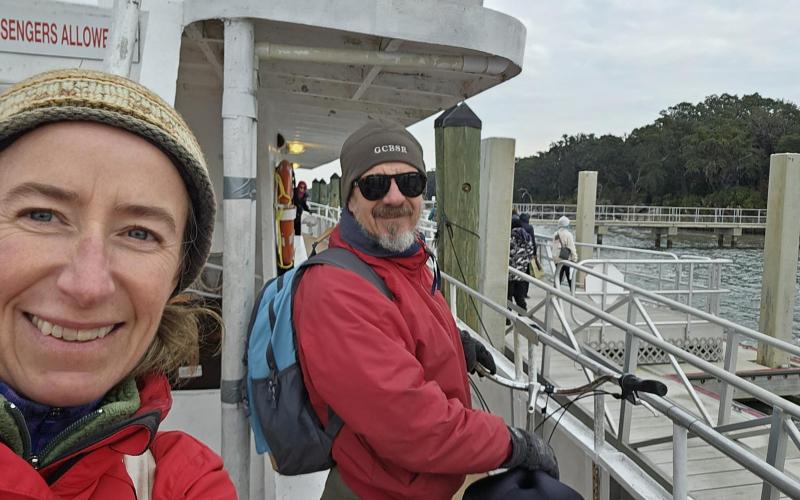
 Dobbs and me aboard the ferry
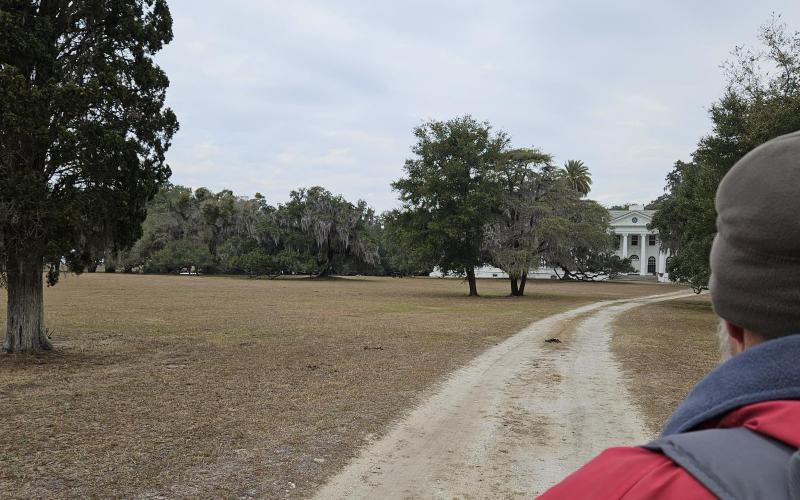 Approaching Plum Orchard
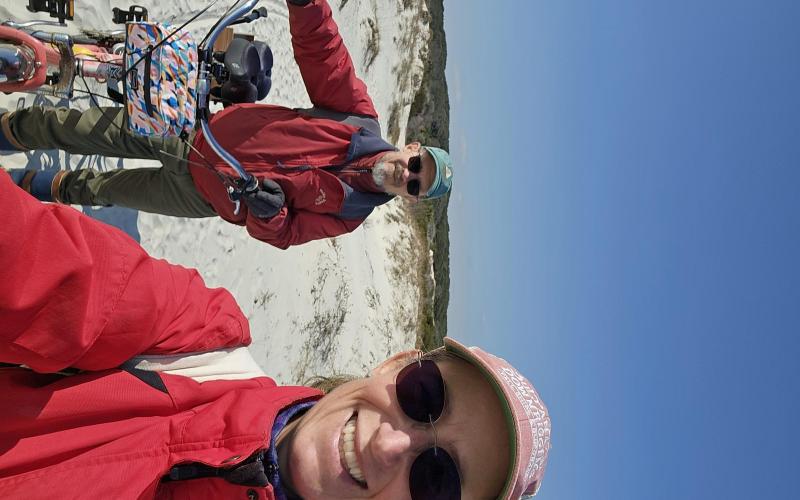 Crossing the dunes
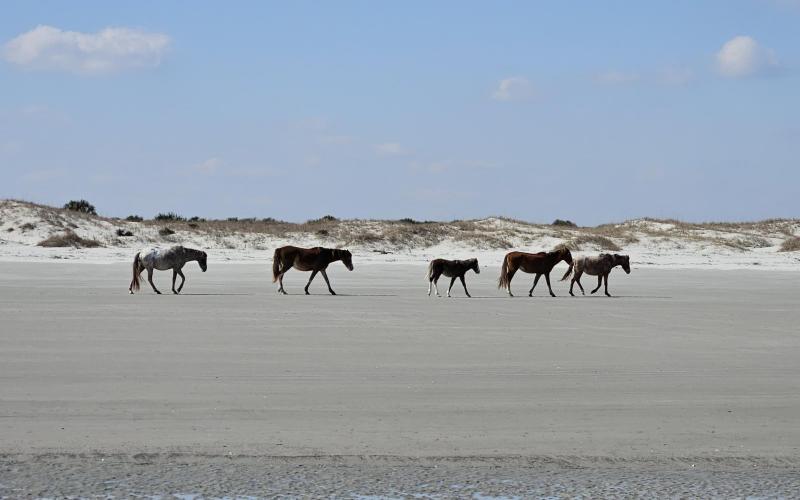 Wild horses
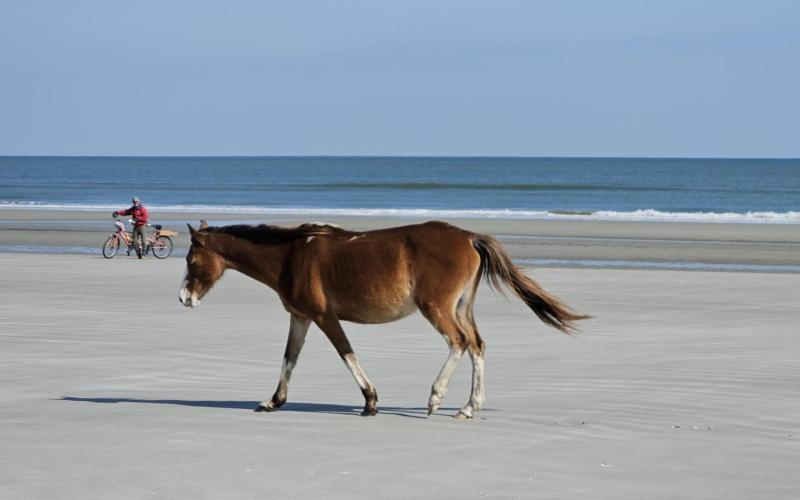 Dobbs with our bicyle, in the background
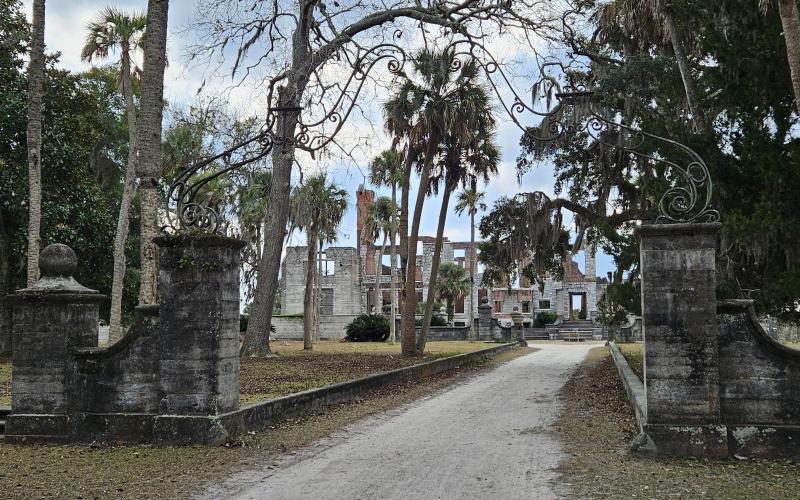 Dungeness, from the gate
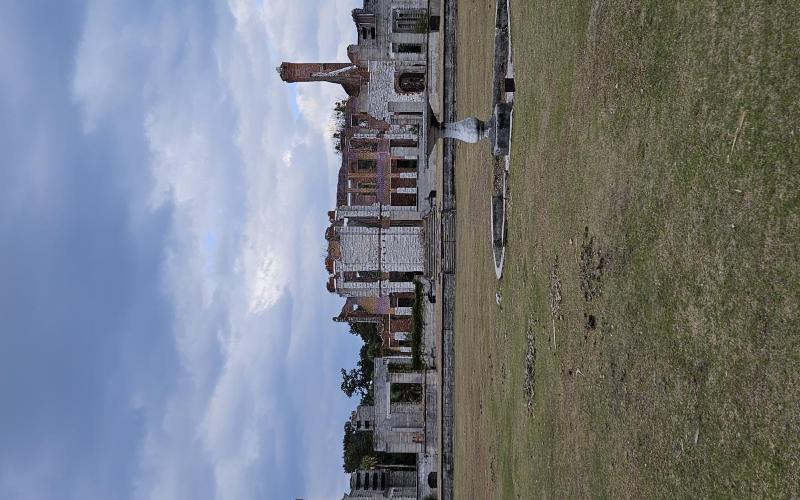 Dungeness, from the lawn
Cumberland Island: Two faces - one, a vast expanse of sand stretching to the ocean; the other, a verdant and gnarled woodland.
On a rare road trip to Florida this year - my typical ride being a 1966 Columbia 31 sailboat - I knew it wouldn't feel right to drive on by. It's one of my favorite places - remote, wild, and quiet. Thankfully, you don't need your own boat to visit there. A ferry that runs out of St. Mary's, GA offers round-trip rides for people and bicycles. It takes about 45 minutes each way.
Dobbs and I were camping nearby at Crooked River State Park. We arrived at the Mainland Visitor Center Dock at 8am as requested, an hour before our scheduled departure. We needed to collect tickets, load our tandem bicycle, and be standing by with the group awaiting the ferry. The morning was chilly, but the sky was clear and the sun shone brightly. The day promised to warm up a bit, but a major winter storm was quickly approaching, a gale and rapidly falling temperatures forecast to lead the way. Each of us knew that sometime during the afternoon the weather would change dramatically. To Dobbs and my amazement, no one was deterred. In fact, there were people tent-camping out there! And we thought we'd be the crazies - proof that we were in good company.
After a welcome and announcements from a park ranger, we boarded the Cumberland Queen. Liveaboards and cruisers were anchored off of St. Mary's, out in the river, and it felt strange to be looking out at the boats from the land-based side of things. It also felt strange to not have a role to play on the vessel - it's rare for Dobbs or me to be on a boat and not be captain or crew. Our minds ran to what we would be doing, and then relaxed and enjoyed the ride.
A steel ferry outweighs our Columbia 31 by a magnitude, and thusly chop that would bounce Grace around and slow her down is imperceptible on the ferry. Dobbs and I actually like feeling the boat move (to a point) - I guess that's the dinghy sailor in both of us.
Before long, we were turning the corner north into Cumberland Sound. Dobbs spotted the brick chimneys of Dungeness sticking up above the live oaks and palmettos. We felt excited to be returning, this time with our bicycle. What would it be like?
The ferry landed and we disembarked. Again, the strangeness - no dinghy to tie up or carry above the high tide line, no yacht to gaze out upon, checking to see that she's riding okay. Nothing to do but hop on the bicycle and start riding.
We decided to head up to Plum Orchard first. We know that the sandy roads get fluffier going south to north, so we figured we'd start with the most challenging riding. It felt completely different to be on a bicycle, clicking off the miles, versus walking - we were traversing sections of road we'd not been able to access previously due to distance. Yet a bicycle (when not pedaled furiously) still moves slowly enough to sight-see. In the stoker position, I get to bird-watch, having no responsibility for keeping my eyes on the road. Dobbs, as captain, gets first glimpse of everything in front of us (the road, horses, pigs, mansions), whereas my view is of the back of him. Riding on shifting sand is a practice of trust and coordination.
Upon arrival at Plum Orchard, we greeted the rangers and used the facilities but elected not to tour the mansion since we'd done that at least twice before. This would leave us more time for new experiences, like riding on the beach. The rangers highly recommended this. In the island's heyday as a winter residence for the Carnegies, people built wheeled tripod carts with sailing rigs and raced them on the beach. When the tide is out, the sand packs down hard. What do you know? It was low tide.
The challenge is getting the bicycle to the beach. Cumberland Island has a mature dune system - large, substantial, and about 1/4-mile wide. A series of secondary, primary, and fore- dunes rise between wooded trail and beach. The park service has constructed boardwalks to protect the fragile primary and secondary ridges from human traffic, but they end shy of the foredunes. Our bicycle weighs 65lbs and, even with 2" wide tires, there's no pedaling it through deep sand. We push and carry and struggle, trying not to fall over. It's worth it - the beach stretches before us out to the Atlantic, and the Atlantic to the horizon. The wind has yet to arrive. We mount up and pedal, flying along the strand. Dobbs playfully steers us toward the surf, then away, then back again. As we ride south, a herd of wild horses walks north, their manes and tails blowing in the breeze. They pay us little mind. We revel in the unlikeliness of it all - riding our big pink bike on the beach on an island in Georgia. We are fortunate. And grateful.
...also attentive. The breeze that was rustling the horses' hair is beginning to build. We really want to ride all the way to the jetty at the south end of the island to explore the tide pools that form around the rocks, but that will put the wind in our faces heading back. We know what's coming. We surprise ourselves and actually do the prudent thing and turn around. That's experience for you! We know what foolishness looks like. We stumble back over the dunes and ride to Dungeness, the winter retreat of Lucy Carnegie, now in ruins.
The sky broods overhead and the air is cooling fast. Dungeness must have been something - a wonder - in its day, because it's still breath-taking in its broken, skeletal state.
When we return to the ferry dock, we find people sheltering in the island's Visitors Center, which is heated. It's blowing stink and the ferry is churning and groaning at the dock - it's a lee shore. We feel for the captain and crew. Thank goodness for horsepower! As we're boarding, snow is falling. It's freezing. Rather than stay on deck as we did on the trip over, we choose the cabin passage. This time, I don't mind not being on Grace, nor do I mind not being anchored out.