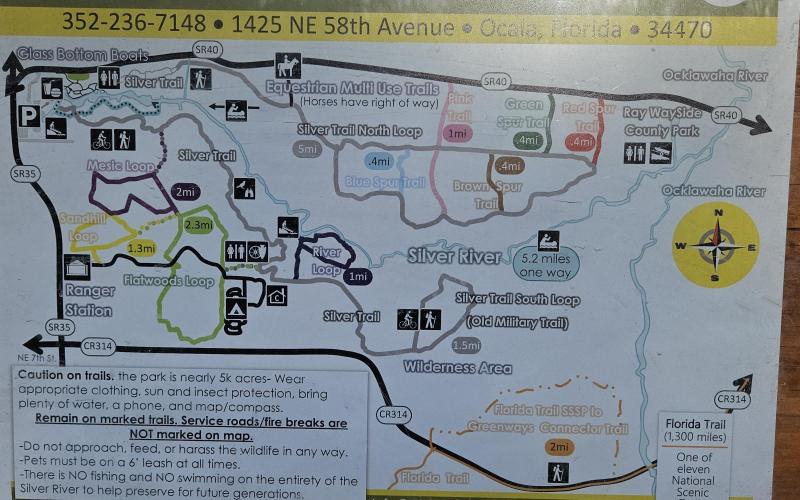
 Map of Silver Springs State Park
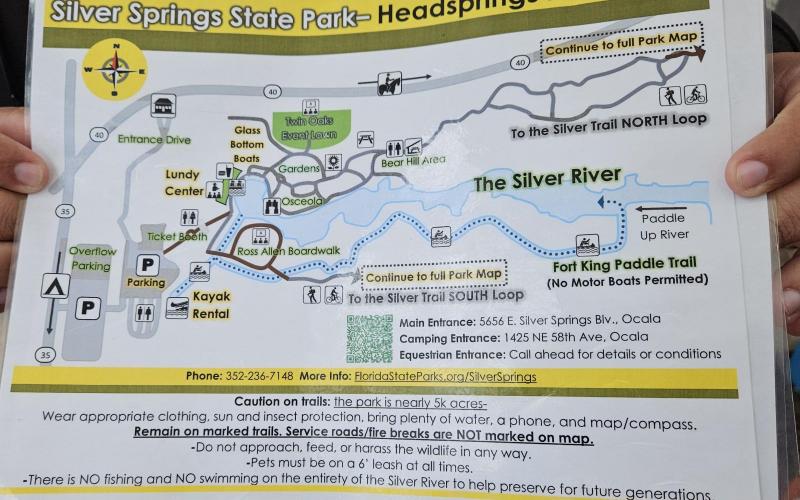 Map of the headwaters area
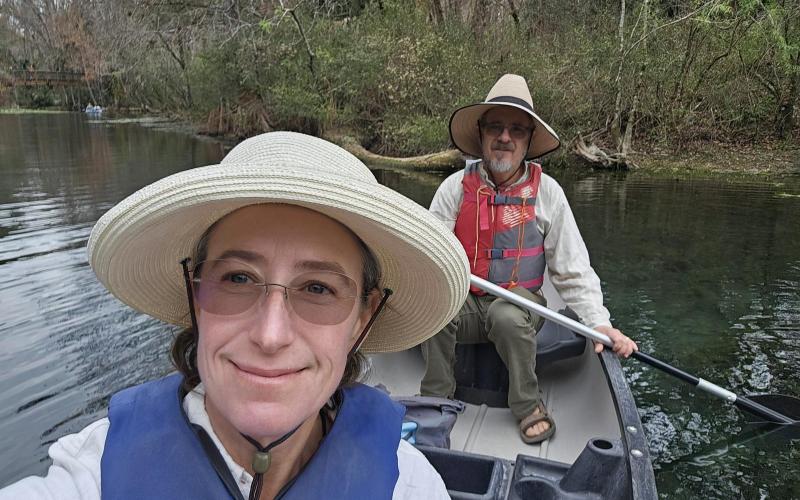 It's been more than 20 years since either of us was in a canoe!
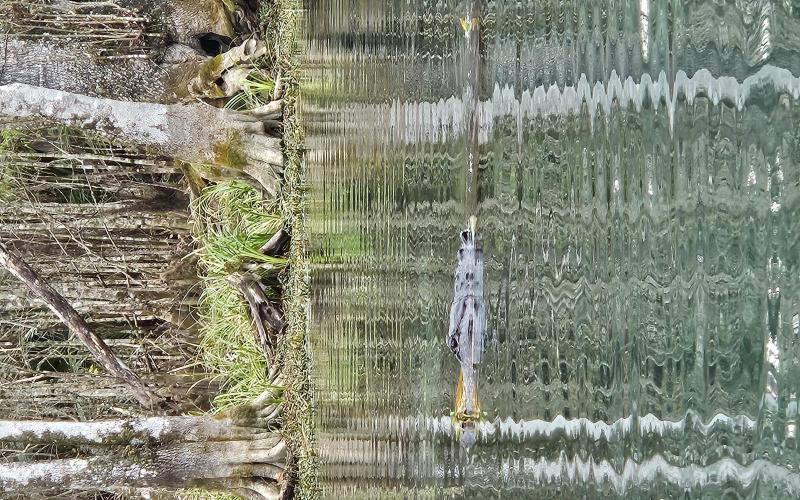
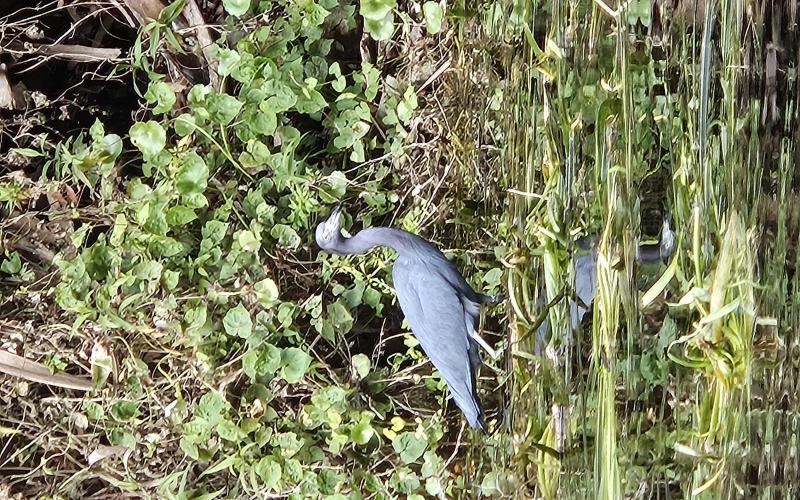 Little Blue Heron
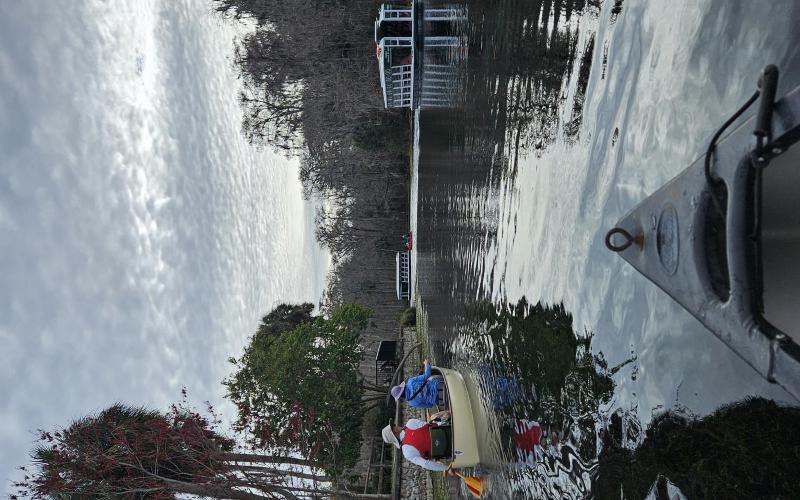 James and Kristen lead the way downstream past glass-bottomed boats.
 Gator!
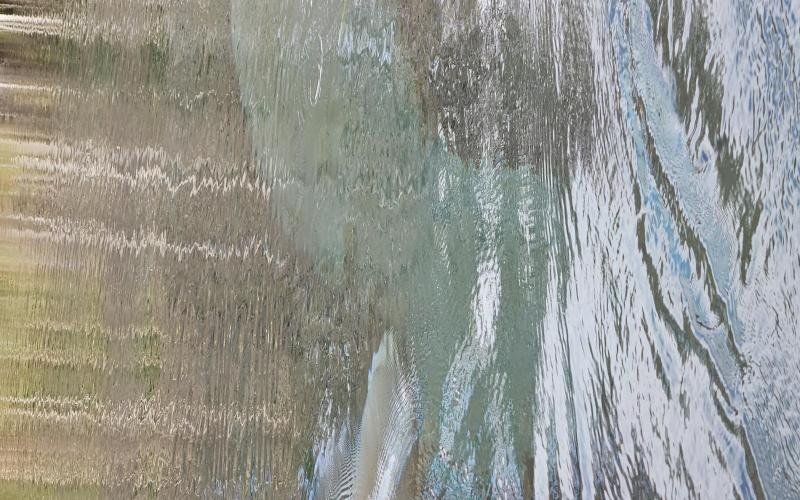 Manatees
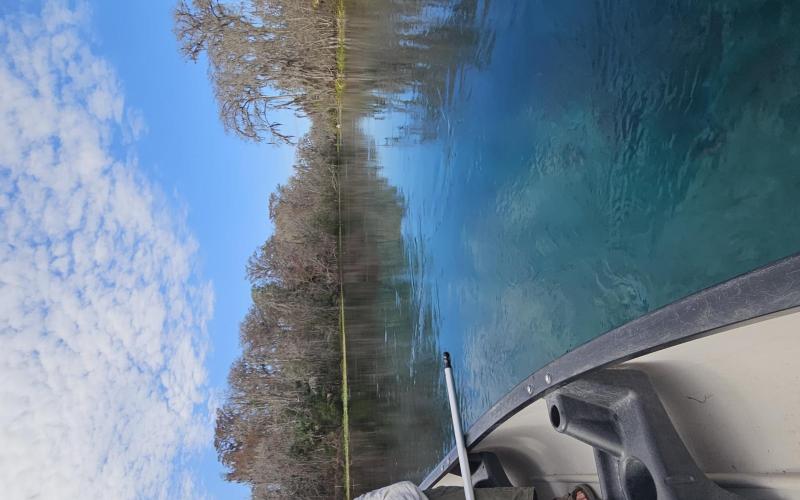 The colors!
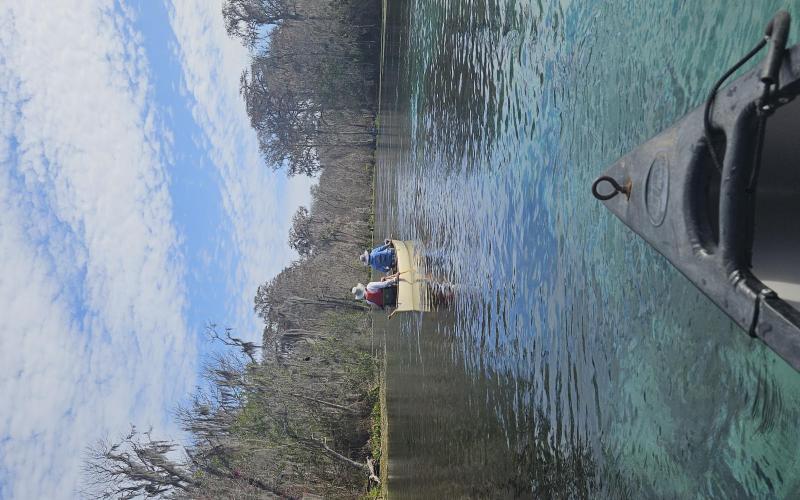 Serenity
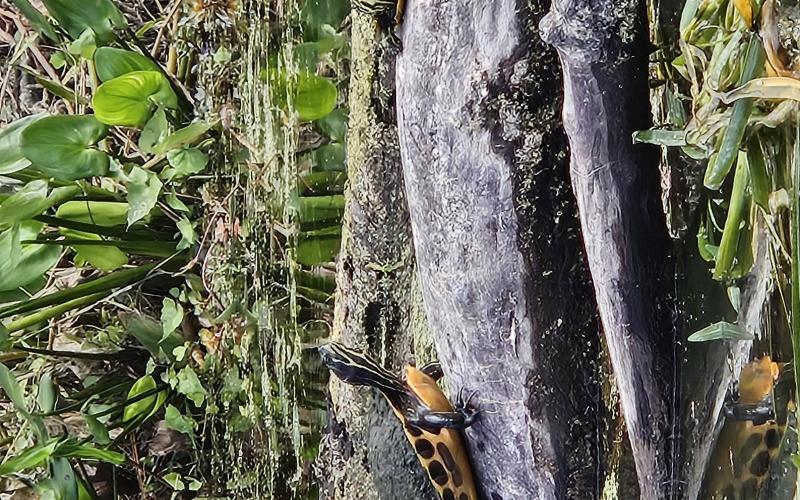 Turtles
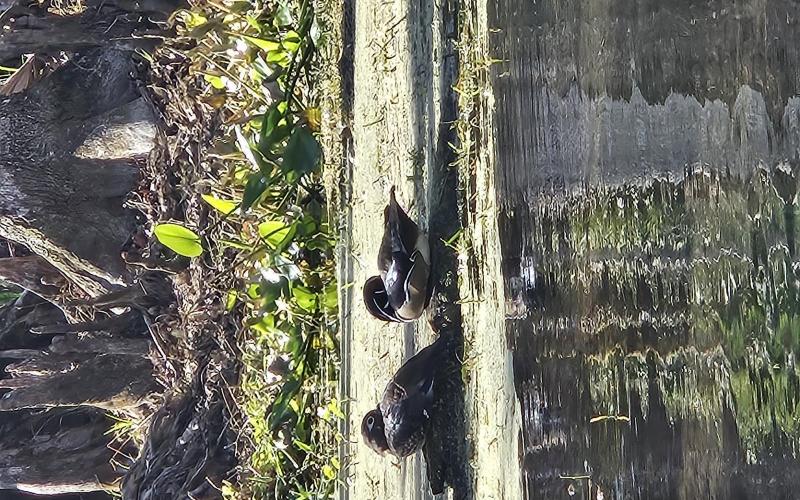 Wood duck pair
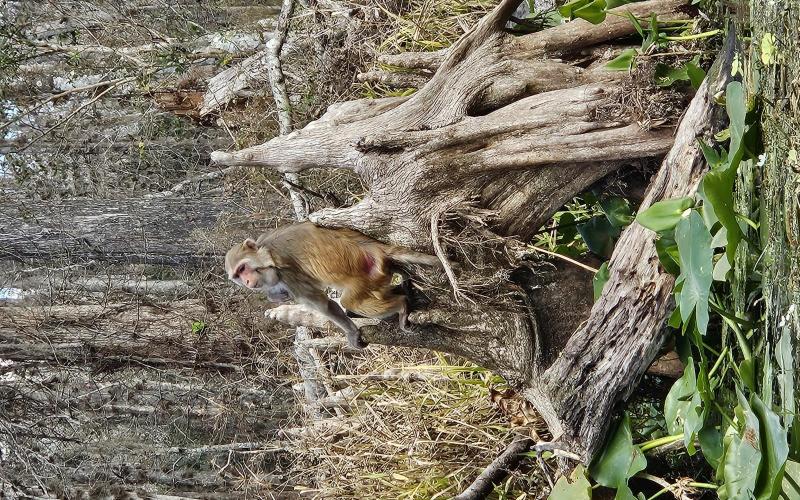 Rhesus macaque, one of the larger ones
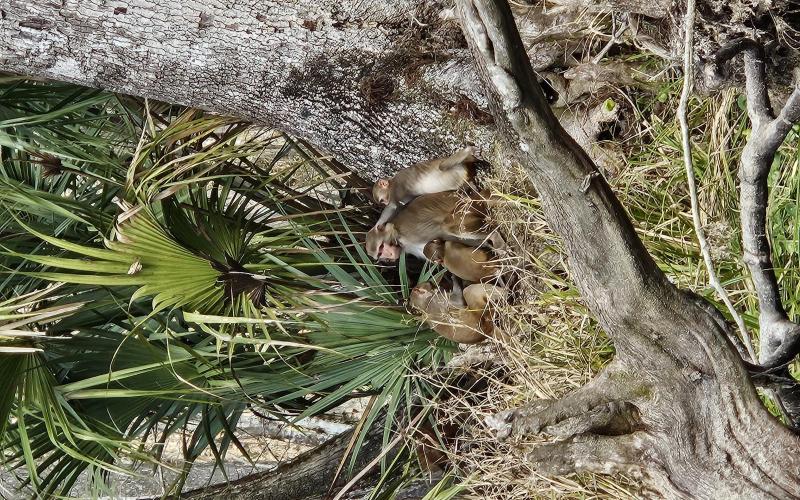 Youngsters pesting mom to nurse and grooming her.
Before I looked up Silver Springs State Park, I didn't know that the plains of north-central Florida are home to a freshwater spring that flows in a river, ultimately to the Atlantic. I was about to leave on a road trip south to visit family in Inverness when I learned that friends - Kristen and James - had landed a camp host position at the park campground. I quickly rearranged our itinerary to add a stay there, thanks to them sharing their campsite with us, as the popular campground was sold out.
They suggested a canoe trip down the Silver River, starting at the headwaters - a basin within the park where Mammoth Spring vents from a crack in the bedrock about 20' below the water's surface. This spring produces over 550 million gallons of crystal-clear water daily, resulting in a steady 3-5mph current that will carry even the laziest of paddlers the five miles downstream to a take-out. With most of the day still ahead of us, that meant ample time for satisfying our amateur naturalist curiosities.
I was immediately wowed by the brilliant swimming-pool-blue water color (honestly, I had to keep reminding myself it wasn't fake), which is due to the sand and limestone bottom. Lush green SAV (submerged aquatic vegetation) contributes to the effect. There were manatees everywhere, which, Kristen pointed out, is especially significant because they have to pass through Buckman Lock to get here. The environmentally near-disastrous, never completed Cross Florida Barge Canal, of which Buckman Lock is part, is a story on its own.
In winter, the Silver River is a vital warm-water (72-degrees) refuge for over a hundred manatees. Also alligators. I have big reservations about being in a small boat in close quarters with toothy reptilian predators, but everything else was so amazing that I allowed myself to be swept along, cautiously avoiding them. Fish of all sizes swam beneath our canoe, darting away the moment we moved in for a closer look. Peering into the depths, I was mesmerized by blades of eelgrass swaying in the current. The bottom and sides of the river are nearly carpeted in SAV, except for bare patches of sand that reflect that unbelievably blue-green hue.
We poked in nooks off to the edges and found wood ducks and limpkins. I learned later that the wild loud shrieks we were hearing were limpkins. Anhingas, herons, egrets, and ibis dotted the banks. Occasionally we'd spot a grebe or a couple gallinules. Then - my favorite - monkeys. I didn't even know they were here until Kristen mentioned it. Released in the 1930's by a tour boat operator to boost rides on his "jungle cruise", six rhesus macaques quickly naturalized and reproduced, and their numbers are now in the hundreds. They're not native and they can carry herpes B, making their presence here controversial. That being said, they are extremely fascinating to watch.
As we neared our journey's end, James guided us beyond the take-out a short distance, to show us the river's confluence with the Ocklawaha. The color change from cyan to to muddy brown was so abrupt as to suggest a wall between the two. The Silver River - five miles of gem-toned beauty tucked into the sand hills of north-central Florida.
Also, a day on the water, with friends...in January!