Cold weather sailing can be enjoyable and peaceful, with quiet waterways, steady breezes (without the chance of a summer Chesapeake pop-up thunderstorm), and crisp, beautiful views of the Bay and its shoreline. But the cold also introduces risks for sailors, both underway and at the dock. Proper preparation can make all the difference on a chilly day.
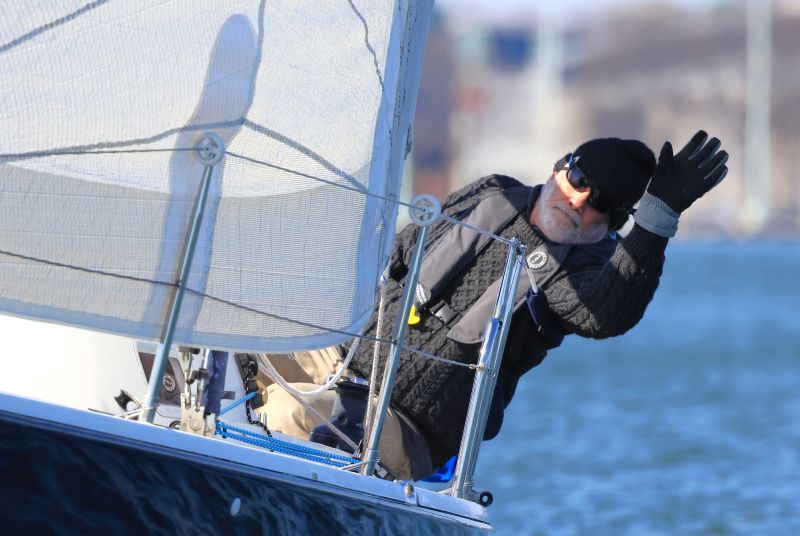
Common sense and preparation are keys to cold weather sailing.
One of the most important factors in winter sailing safety is wearing the right clothing. Cold air, wind chill, and frigid spray greatly increase the risk of hypothermia, especially if the sailor gets wet during a maneuver. Start with a moisture-wicking base layer topped with insulating mid-layers such as fleece or wool. Your outer layer should be waterproof, windproof, and, ideally, designed so that it won’t restrict movement while trimming lines or grinding winches. A thermal hat, sailing gloves with insulation and grip, and warm, moisture-resistant socks are essential. Footwear should be waterproof with excellent non-skid soles, and always wear a properly fitted lifejacket over your outer layers. Sometimes a dry suit is appropriate.
Make sure you have a VHF radio and back-up communication system onboard. Stowing a second set of dry clothes and provisioning with warm food and beverages are also smart strategies.
Safety on snowy or frosty docks requires extra attention, especially when carrying sails, gear, or provisions. Winter docks can turn into slick runways. Walk slowly and plant your entire foot with each step. Use shrouds and lifelines for balance whenever you’re getting on or off the boat. Clear snow from the dock and your deck before loading gear or untying dock lines. If frost is present, assume it’s more slippery than it appears; black ice can form on wooden, metal, and composite docks alike. Wearing traction cleats that slip over your boots can significantly increase stability and are widely used by winter liveaboards.
Heaters can be wonderful for keeping the boat warm, but they also require caution. Look for marine-appropriate heaters with tip-resistant designs and automatic shutoff features. Always read and follow the manufacturer’s safety guidelines. Ensure your cabin is properly ventilated to prevent carbon monoxide buildup, and check that your CO detector is working before every overnight stay. Never leave a heater running unattended.
For additional cold-weather boating guidance, visit boatus.org and search “cold weather.”


