Top Questions Parents Ask Before Sending Kids to Sail Camp
In the coming weeks, yacht clubs and sailing hubs around the Bay will roll out their welcome mats for young sailors enrolled in summer youth programs. Youth programs come in a variety of ‘flavors’ and teach everything from introductory skills to racing strategies and from boating safety to Chesapeake ecosystems and history. No matter which variety appeals to you and the young sailor in your life, sailing camps help kids feel confident and competent in boats and develop life skills that go far beyond sailing.
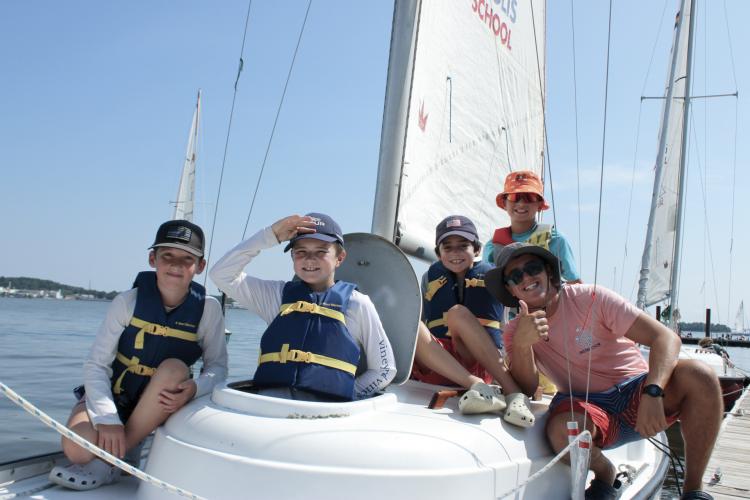
Parents who are new to the junior sailing scene will likely have a few questions, so we’ve reached out to several local junior programs for answers to some of the questions most frequently asked by parents.
Will my child enjoy sailing camp?
“Parents can be assured that their children will have a blast if they are outgoing and comfortable around water and can swim and tread water for a minute while wearing a lifejacket,” says Sharlene Wilkins, junior sailing program director at North East River Yacht Club. “Children will quickly learn the basics, and there is no stopping them from there.”
What are the class sizes, and how are the kids grouped (age, ability, or both?)
Max Plarr, sailing director at Hampton Yacht Club, explains, “Every program is unique, but the standard set by US Sailing for the student-to-instructor ratio is 8:1, so class sizes should be between six to eight kids. Classes are usually formed by ability, such as learn-to-sail (beginner), intermediate, and advanced or a race team. Most classes are subdivided by age, as the maturity level, focus, and instructional approach vary greatly between the basic age groups, which are roughly five- to seven-year-olds, eight- to 12-year-olds, and teens ages 13-15 and 16-18.
Does my child need to know how to swim?
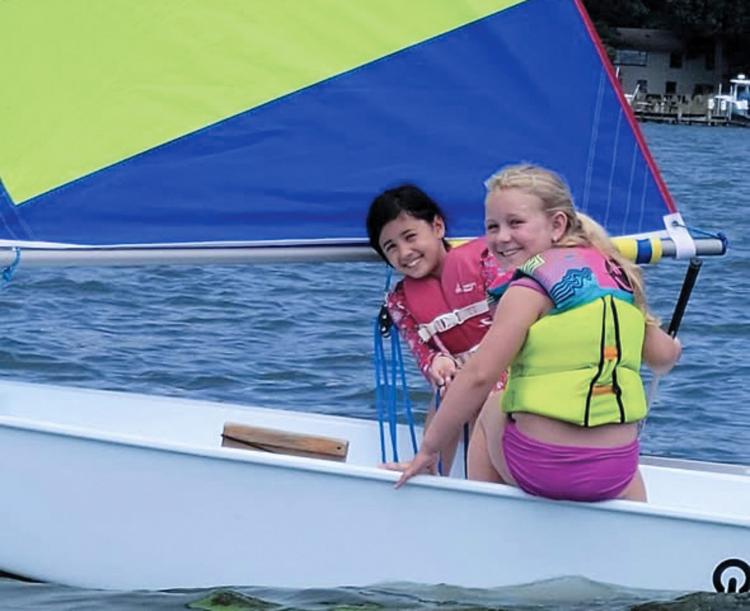
If your child isn’t a proficient swimmer, it’s best to speak with the junior sailing program director about your individual situation and the camp’s expectations. Most programs have some type of ‘swim test,’ but the requirements to pass can vary and are often tied to the child’s age and the type of sailing they will be doing. Sometimes, they simply require that the child is able to swim a certain distance while wearing their lifejacket. Regardless of their swimming skills, all junior sailors will be required to wear a lifejacket when sailing.
What should my child wear?
“When attending sailing camp, young sailors should arrive ready to get wet, with a bathing suit already on underneath their clothes, especially on the first day of camp (when most programs will administer a swim test),” says Michaela “KayKay” Turner, camp director for Kidship at Annapolis Sailing School.
She continues, “Closed-toe water shoes with hard soles are important to protect little feet on boats and docks. For sun protection, we recommend long-sleeved rash guard shirts. Most importantly, sunscreen should be applied before camp, and kids should be comfortable reapplying it themselves throughout the day.”
What if the weather doesn’t cooperate?
Although you don’t need to worry about kids sailing in hazardous conditions, most programs will sail in light rain, so send a rain jacket if showers are in the forecast. Instructors are prepared to facilitate onshore learning, activities, and games when it is stormy. On the other hand, if there is no wind, they are equally prepared for entertaining instruction and games, both on and off boats.
Travis Carlisle, junior program director at Severn Sailing Association, explains, “Even if there is too much or too little wind, we will still do something! Junior programs typically have contingency plans in place for inclement weather days. There are a lot of games and learning opportunities, even if we can’t get out on the water during the program. For example, they could do land drills, compete in rigging races, practice knots, or learn weather patterns.”
What should my child bring?
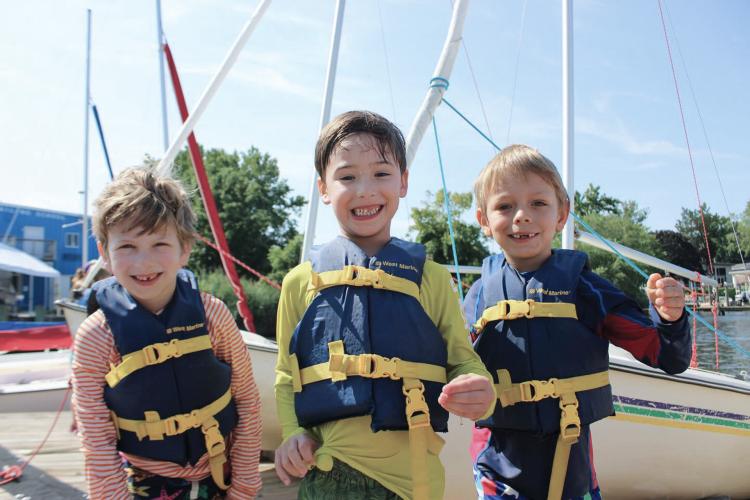
“Each day, sailors should bring the essentials to stay comfortable and safe on the water,” says Turner. “That will include sunscreen, a wide-brim hat, sunglasses with a strap, and a water bottle (large, insulated bottles are best). A bathing suit (worn to camp), a towel, and a change of clothes are also key. Pro tip: put dry clothes in a zip-lock bag inside their backpack to keep everything organized (and your car dry on the ride home).
“Sailors in full-day programs should pack a lunch and an extra snack, as kids build up big appetites when they are active all day. Finally, if your program doesn’t provide lifejackets, be sure to bring a US Coast Guard-approved lifejacket (also called a personal floatation device or PFD).”
What should my child not bring?
The answer to this question may vary by program. Phones and electronics are items that most often come to mind. Many programs allow campers to bring phones but require that they be put away during program activities.
Turner explains Annapolis Sailing School’s approach: “To maintain a safe, focused, and distraction-free environment, electronic devices such as cell phones, tablets, smartwatches, and gaming devices should stay at home. It’s also best to leave toys at home, as Bay water can be tough on personal belongings. For safety reasons, jewelry should not be worn to camp since it can get caught on lifejackets, rigging, or other equipment.”
If the program is at a sailing club, must we be members?
Most sailing clubs that offer summer camps either (1) do not require membership for youth programs or (2) offer a junior membership for the summer. In other words, membership shouldn’t be a barrier to entry, and some programs offer scholarships to offset or cover the cost of enrollment fees. Reach out to the program that you are interested in for details specific to that school or camp.
Turn to SpinSheet for Youth and Collegiate coverage all season long. We will bring you regatta recaps, coach profiles, clinic information, and other junior sailing news. Submit your story ideas and photos to [email protected].
Find more youth coverage.


