Sailfaster Discusses Process, Communication, and Winning Races With a World Champion
Morgan Trubovich has won 19 World Championships across everything from America’s Cup boats to J/70s and Etchells, but when he joined Pete Boland for a recent Sailfaster podcast episode, the conversation wasn’t about trophies. Instead, it focused on the systems behind consistent racing performance, particularly process, communication, and learning speed. Here’s an edited extract from the episode.
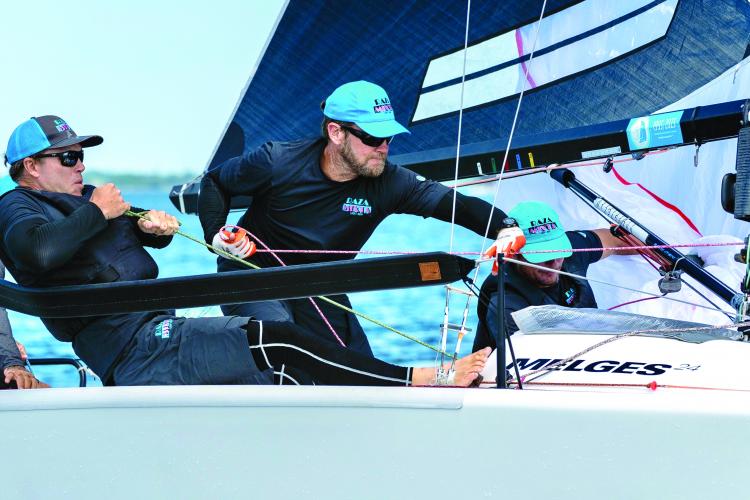
Sailfaster: You’ve said before that you don’t wake up thinking about winning. That’s unusual in sailing. What do you mean by that?
Morgan Trubovich: I think results are a really dangerous thing to focus on because they create anxiety and they pull you away from execution. If you’re thinking about where you need to finish, or who you need to beat, you’re already outside the boat mentally. The best racing I’ve been involved in has usually come from teams that are completely absorbed in the process. We’re just trying to execute well: starts, communication, maneuvers, decision-making. If you do enough small things well, results take care of themselves. That doesn’t mean results don’t matter. Of course they matter, but they’re a lagging indicator. They’re the outcome of dozens of smaller behaviors done consistently well over time. The mistake sailors make is trying to force results directly instead of improving the inputs that create them.
How does that actually show up on race day?
Usually through simplicity. Good teams reduce things down. I remember Andrew Palfrey once saying before a regatta in Turkey, “Let’s just do three things well today.” Immediately, the pressure came off the team because nobody was trying to solve the entire event at once. That’s important because sailors tend to overload themselves mentally. They’re thinking about points, conditions, competitors, gear settings—everything at once. Under pressure, a simple process is incredibly powerful. The best teams I’ve worked with are very calm because everybody understands exactly what matters in that moment. They’re not trying to win the regatta on one beat. They’re just staying disciplined enough to keep stacking good decisions together.
You’ve also spent a lot of time thinking about communication onboard. Why is that such a performance issue?
Because most teams think they communicate better than they actually do. Boats are noisy, high-pressure environments. Words get lost constantly, so if communication isn’t deliberate, mistakes compound quickly. One thing I’m big on is eliminating ambiguous language. Don’t use words that sound alike. Don’t overload sentences. Always acknowledge requests. If somebody asks you to do something, a quick “copy” matters because it confirms the message got through.
A surprising amount of performance loss comes from confusion rather than sailing skill. Often the issue isn’t tactics or boatspeed at all; it’s that information either arrived too late, wasn’t clear enough, or created uncertainty at exactly the wrong moment.
You’re known for recording audio onboard now. What does that reveal?
Audio is brutally honest. Teams often come off the water convinced communication was calm and clear, and you listen back and realize there was panic, overlap, people talking over each other, or important information getting drowned out. The useful part isn’t blaming people—it’s creating awareness. Once sailors hear themselves objectively, they usually improve very quickly.
What’s one thing club racers could improve immediately?
Stop obsessing over competitors and focus more on your own execution. A lot of sailors spend the entire pre-start worried about who’s around them instead of simply asking: Are we organized? Is communication clear? Are maneuvers clean? Is the boat moving well? The fastest improvement usually comes from doing ordinary things consistently better, not from searching for some secret tactic. That’s especially true in one-design racing, where small execution errors compound very quickly. Teams often think they need something sophisticated, but in reality, they just need cleaner fundamentals repeated more consistently under pressure.
Listen to the full episode on Sailfaster wherever you get your favorite podcasts or on YouTube.


