Fresh off a dominant win in the Figaro 3 Il Giro around Italy—racing from Venice to La Maddalena to Genoa—Charleston, SC-based Sweta Shervegar has become one of the most compelling offshore sailors on the international scene. Her sailing journey spans community coaching in India, an Asian Games silver medal, and a growing career in the United States as a racer and a national team coach. She explains to Pete Boland of the Sailfaster Podcast how she and a new co-skipper won one of Italy’s most challenging doublehanded races, why mental training is her secret weapon, and where she finds speed on the racecourse.
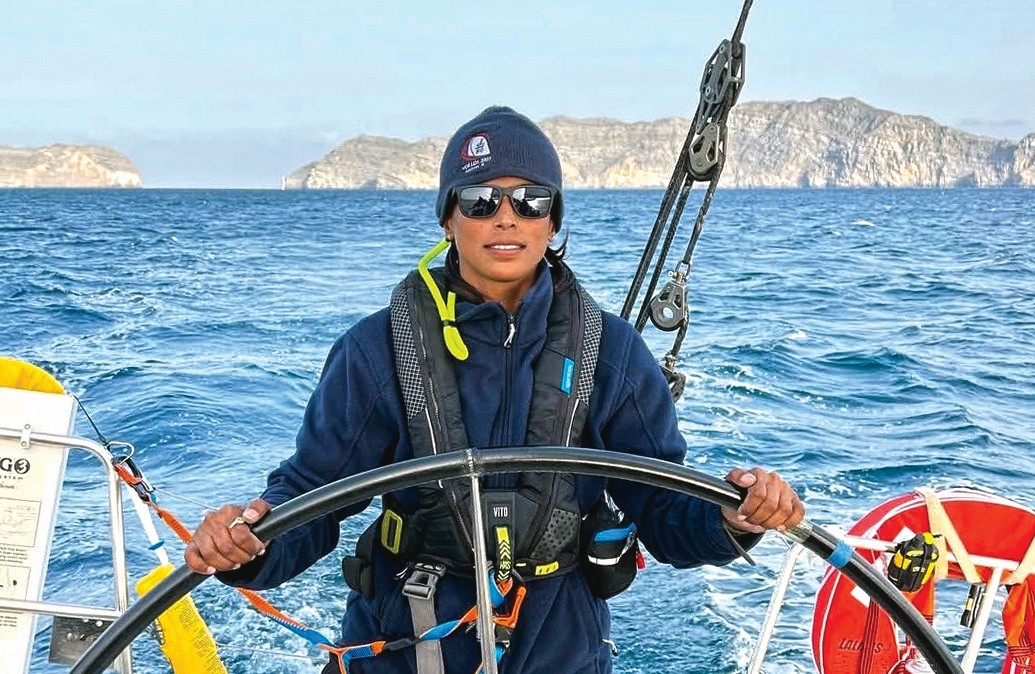
Sailfaster: You’d never sailed with your Figaro 3 co-skipper before Il Giro. How did you form a winning partnership so fast?
Sweta: It’s true—Cameron and I met only a day and a half before the start. We used that time to check the boat thoroughly, run through systems, and take one short training sail. But offshore racing forces you to trust quickly. I usually helm the starts and Cameron is very strong on the bow, so we divided our roles immediately and planned our watch systems. Once the race began, communication and consistency mattered more than knowing each other for years. We committed to the plan, stayed calm through everything from zero to 40 knots, and it worked—we took the win. Now we’re even talking about a campaign together for the mixed offshore discipline.
Sailfaster: You started sailing through a free community program in Mumbai and eventually reached the Asian Games podium. What fueled that rise?
Sweta: I wasn’t from a sailing family, so the Sea Cadets program changed my life. I started in an Opti and loved it so much that I refused to move classes even when I grew too tall! Eventually I did a Laser camp, won the ILCA 6 Nationals, and soon raced my first international event in Thailand. I coached for years at the same program that taught me, because I wanted to give back to the next generation.
The Asian Games were an emotional milestone. My teammate Varsha and I secured silver in the 49erFX, and when we arrived home, there were crowds at the airport, fireworks, and—yes—a horse parade. It was especially meaningful because sailing is still growing in India, and a medal for the country meant a lot. But my goal isn’t finished; one day I still want to hear our national anthem playing while I’m on the podium.
Sailfaster: You’re known for your mental preparation. How do you train your mind for big regattas?
Sweta: My philosophy is to train as you race, and race as you train. Mental preparation is part of every routine: visualization, breathing, and positive self-talk. Before the Asian Games, our boat was stuck in customs and we had no backup, so all I had was mental training. Every night I closed my eyes, pictured the racecourse, imagined shifts, felt the boat under me, and visualized mark roundings. Your mind is connected to your muscles—if your mind rehearses it, your body performs it.
As a coach, I use the same approach. Before regattas, I gather the team, have everyone close their eyes, breathe deeply, and mentally run through the entire course: start, shifts, roundings, communication, everything. When athletes do this consistently, their stress drops and their decision-making improves dramatically.
Sailfaster: You talk a lot about positive self-talk. What does that look like during a race?
Sweta: It’s confidence and control. At each stage of the race I talk myself through a checklist: Top mark in 20 lengths. Is the boat clean? What’s next? Are centerboard, vang, and rotations set? Where is the pressure? If I’m sailing doublehanded, I do that internally first and communicate it to my teammate. Clear self-talk prevents panic, reduces mistakes, and keeps you ahead of the boat, especially during crowded mark roundings where you can gain or lose a dozen lengths in seconds.
Sailfaster: Where do you make your biggest gains on the racecourse?
Sweta: Starts and the first top mark. Before every start I do several practice starts—accelerate, build speed, and go into height mode. Those first 15 to 20 boat lengths after the gun are the biggest opportunity to get clean and stretch. At the top mark, preparation is everything: a single smooth rounding can earn huge gains.
Offshore, it’s about trusting your homework. In Italy, we analyzed weather apps and pressure bands for days and chose an offshore route when others stayed near land. We were miles out—no one could even see us on radar—but staying on the edge of the pressure band paid off. If your preparation is solid, stick to it. Don’t abandon a winning idea just because the fleet isn’t following you.
Find more great racing content.


