How To Minimize Costly Decisions and Make the Most of Multiclass Regattas
Sometimes at a small boat regatta, you look around, and all you see is boats just like the one you’re on. Other times, it’s a very different view: Boats half your size and boats twice your size all share the same racecourse with you. Multiclass regattas can be a ton of fun. Having more sailors leads to more laughter and fun stories at the regatta parties! But mixing and matching all those boats can also lead to chaos. Minimizing that chaos means maximizing both how much fun you have and your success on the racecourse.
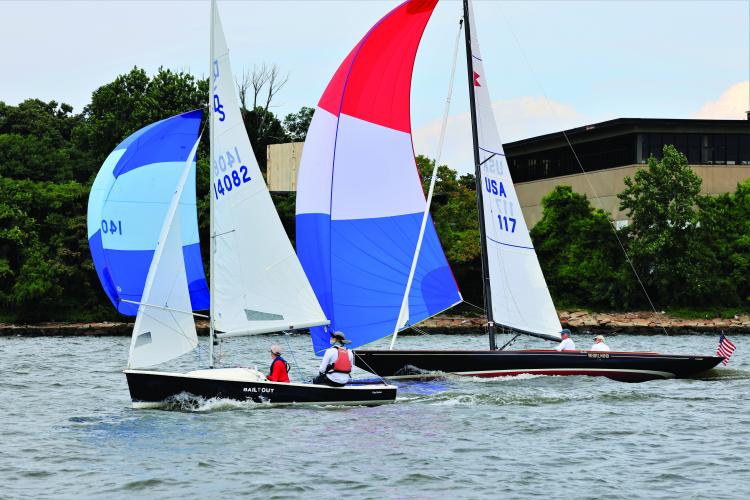
There are three “phases” to consider: While racing, between racing, and… paperwork.
While you’re racing, for best success, it’s important to minimize costly decisions. Essentially, this means being aware not only of the boats in your fleet but in the other fleets as well. Acknowledge that different boats behave differently: Traditional spinnaker keelboats and planing skiffs with asymmetrical chutes sail at different angles (especially downwind) and move at very different speeds. Their views are very different, too; visibility is different looking under a spinnaker on a J/22 than it is trying to peek around one on a Viper. Knowing your fellow sailors’ blind spots is important. Be realistic about what other kinds of boats can and cannot do.
Speed, angle, and maneuverability affect not only positioning, but how the rules play out. Be extra conservative in tight situations; different fleets may have different thresholds of what tacking too close is, for example. Of course, different length boats have different length zones, which can make mark rounding confusing to say the least. It may be better to show a boat in a different fleet a bit of grace at a mark rounding and to sail outside of them than to get wrapped up in a protest situation. Focus on sailing fast and smart on your next leg instead. Focus on racing against the boats in your fleet and only managing (not getting tunnel vision) your interactions with other fleets.
Between races, collaboration and cooperation are must-dos. The fleet that is starting gets the use of the starting box. Every boat wants to get their line sight, shoot head to wind on the line to figure out the favored end, and to check off the other items on their before-the-start homework list. But if there’s more than one start, and it’s not your start, give the other fleets their time on the line.
I did race committee last month at a multiclass regatta, and I was astounded by the number of boats not racing that interfered with boats in their starting sequence simply to “ping” one end of the line for their instruments. Some boats that were not racing sailed through the starting line with less than a minute to go. Situational awareness goes a long way! Even if you think you’re just sailing through, you’re dirtying the air and creating an additional stress for boats that are focusing on their start.
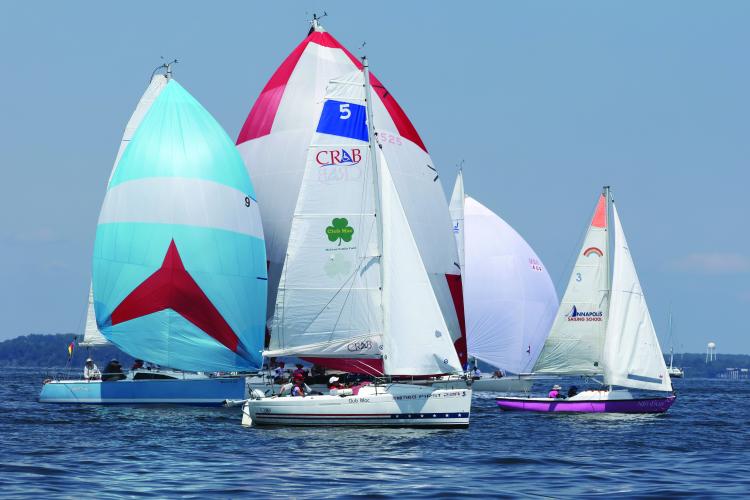
Speaking of situational awareness… also between races, as you’re getting ready for your start, take a look up the course at where the other fleets are in their race. With a handful of fleets on the course all at once, there’s never a perfect time to get a start off. Knowing where the other fleets are lets you anticipate interactions. If you know there’s a fleet that will be rounding the leeward gates near the time of your start, you’ll likely want to hold on one tack or the other to get “outside” the gates to stay clear of them; so having a good lane becomes even more important than usual.
And, a bit of paperwork. With so many different kinds of boats interacting, collisions—potentially including damage—are a possibility. Be sure to have appropriate insurance coverage. Remember, under the Racing Rules of Sailing, if you cause a collision that results in damage, you’re responsible. That can include boat damage, medical bills, or more.
Many regattas and clubs require you to have liability insurance (the part that covers damage or injury you cause), but it’s a good idea anyway. You may also want to add hull insurance to cover damage during traveling, theft, or other issues if you have high-value equipment. For dinghies, you can often get solid baseline insurance through your homeowner’s or renter’s insurance company. For sailors who travel a lot or spend a significant amount of time racing, going with a marine specialist may be a better fit. Always be sure to include that you will be racing your boat—if you are racing and there’s an incident and you are not covered for activities during racing, you may be out of luck.
Now that you’re thinking about how to interact with other fleets on the racecourse, respecting other fleets as they start, and have solid insurance just in case you need it, it’s time to have fun and make friends in other fleets at your next multiclass regatta!
About the Author: Kim Couranz has earned several national and world titles in Laser Radials (ILCA 6), Snipes, and Lightnings. She has also raced J/22s, J/24s, and Ynglings on an international level.
Find more sailboat racing tips


