Sailfaster: Boat speed, starts, and staying in phase.
Few sailors in American one-design racing have been as consistently quick in recent years as Chris Alexander. Whether in the VX One or the Melges 15, Chris has built a reputation for exceptional boat speed, sharp starting, and an ability to stay calm under pressure. On a recent episocde of the Sailfaster podcast, host Pete Boland spoke with Chris about what actually makes boats fast and what racers at every level can learn from the front of the fleet. Here’s an extract:
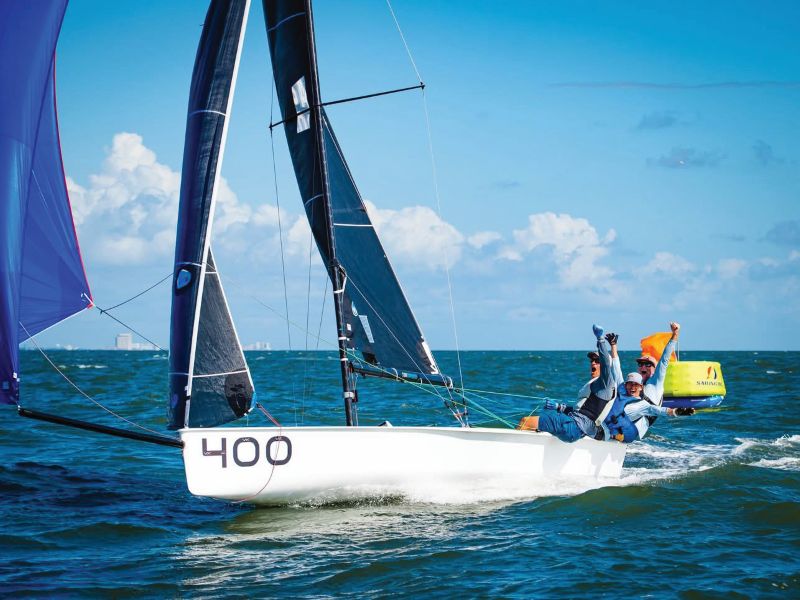
Sailfaster: What’s the biggest misconception sailors have about speed?
Alexander: People overcomplicate it. Fast sailing is usually about doing simple things really well and reacting quickly. In the VX One especially, I’m constantly thinking about keeping the boat balanced and managing leeway. The boats have very thin foils, so if you oversteer or heel too much, you go sideways. A lot of speed comes from anticipation. If you can react to a puff half a second earlier than the boats around you, you gain a couple of feet. Do that over and over, and it adds up to a huge gain by the top mark.
You’ve talked about “high lanes” being critical in big fleets. Why?
Because you can always go higher, but you can’t always go lower. A lot of sailors love footing for speed, but in a crowded fleet that lane disappears quickly. If you can maintain a high lane and keep the bow up without stalling the boat, you control the boats around you. That comes from feel and understanding when the boat can take another “bite” upward. In college sailing you learn to pinch because the lanes are tight. I think that experience really helped me later in one-design fleets.
What do you have your eye on, racing upwind?
Mostly the water. I spend a lot of time reading the leading edge of puffs. The wind is usually about 90 degrees to that leading edge. If a puff is approaching over your shoulder on starboard tack, it’s probably a lift. If it’s coming straight at your bow, it’s likely a header. That sounds basic, but I think people don’t practice it enough. The best sailors are constantly looking outside the boat.
Your comeback win at the 2025 VX One North Americans was remarkable. What changed on the final day?
Mindset, honestly. We were in ninth going into the final day and knew there would finally be breeze. My crew Ricky and I went out with total confidence. We weren’t being cautious; we were hunting.
One thing I’ve started doing more is meditation and mental rehearsal. Not “visualization” exactly but imagining how the race will unfold. I spent a lot of time before the regatta thinking about starts, shifts, and getting in phase early. By the last race of the regatta, I wasn’t nervous at all. That was unusual for me. I felt like we’d already won before the start even happened.
What separates top sailors from everyone else?
Understanding why the boat is fast. For years I relied mostly on feel, but eventually I got obsessed with rig tune, sail shape, and aerodynamics. Once you understand what makes the boat go fast, you can react faster and make better decisions. The other thing is simplicity. I’m always trying to simplify systems, simplify setup, and simplify my thinking. When things get hectic at a start or a mark rounding, the sailors who stay calm and clear-headed usually come out ahead.
Listen to the full podcast wherever you get your podcasts or on YouTube.


