Shifting Sailing Perspective: Moving to the Back Seat
I grew up as a crew member, first as a tween racing on big boats and crewing in college. As I emerged into the “real world” of working, I wanted to keep sailing. When I moved to the Annapolis area, making friends while crewing on boats both big and small was an important part of my life. But owning my own boat was out of the financial question—and it wasn’t something that I, steeped in “crewness,” ever really considered anyway.
So, I focused on becoming the best crew I could be. I grew my technical and tactical skills. I learned more about weather. I focused on sail trim and how sails affect each other. I took a deep dive into rig tuning and how changing the rig affects the sails. I figured out how to be a good teammate by identifying my strengths and weaknesses and those of my fellow crew to figure out how we could best work together, like a jigsaw puzzle.
Building all those skills made me a better sailor who just happened to be sitting in a crew spot rather than the driver’s seat. But I felt like I was missing an element. What did the helm really feel like, and what was the perspective from the back of the boat?
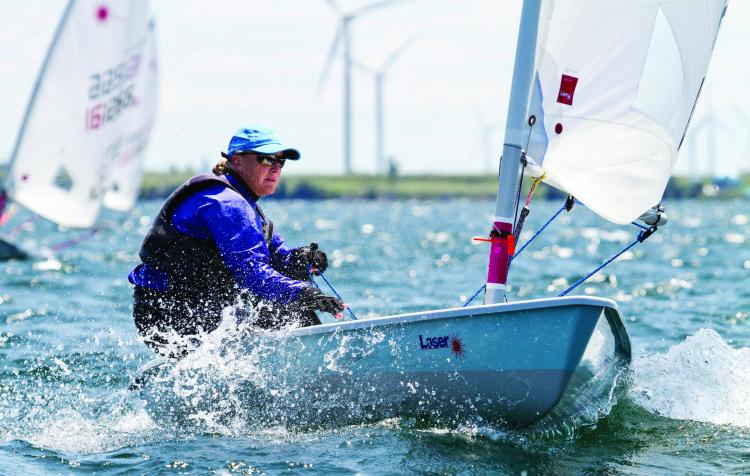
I was finally able to buy a used Laser and take hold of the tiller. I was curious… but also super intimidated. When I registered for a regatta, it was my name in the skipper column. It felt like a really big change.
My first outings were definitely a work in progress. (My more recent ones, years later, are, too.) I fumbled with boathandling, had my head in the boat so much that I’d miss wind shifts and opportunities, and had a complete lack of confidence. Imposter syndrome was strong; what was I doing driving a boat?
Over time, I built tiller skills, which helped me get my head out of the boat a bit. Getting to look around the racecourse let me make better decisions. Better decisions led to better race results and a slow build in confidence. That improvement was mine, due to my work. I was really a skipper!
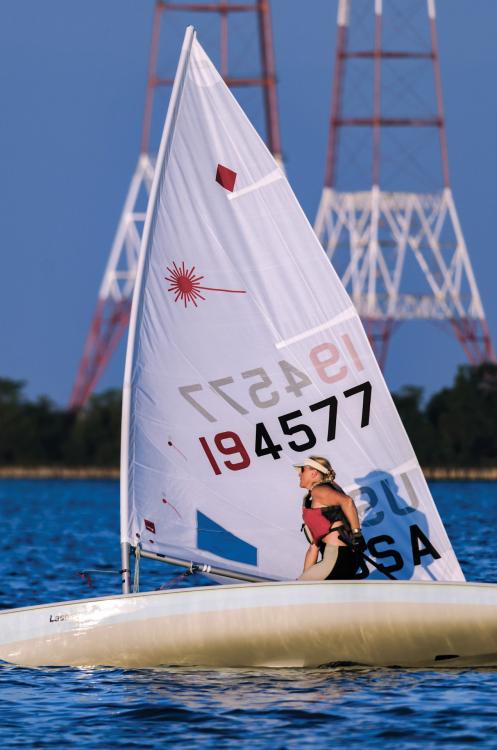
When you boil it down, good sailing skills can be applied to any position on a small boat. If you’re a tried-and-true crew thinking about giving driving a try, go for it! You already know more than you think. You’ve spent considerable time absorbing sail trim, boat handling, and decision-making. You know what works and what doesn’t. You just need to trust that you know these things, and act on it. Bottom line is that the biggest shift from crewing to driving isn’t technical finesse; it’s a mental mindset.
It may be that you end up preferring crewing to driving. For the most part, that’s where I fall—I really enjoy teamwork, and trimming headsails, so crewing feels more natural to me. But developing helm and driving skills can really benefit your crewing. Skippering a boat, where your actions determine where your boat goes on the racecourse and how you interact with other competitors, works your brain in different ways. It forces you to think three steps ahead all the time. Add that mindset to your crewing, and you’ve launched your skills forward.
I go through this process again each spring. Over the winter, I generally crew on Snipes. As the waters warm (a touch of claustrophobia keeps me out of the drysuits needed for small-boat frostbiting), I’ll once again get out on my ILCA with my hand at the helm. It’s always a little rough as I need to recalibrate tacking angles, acceleration toward the starting line, how much boat there is in front of me, and (let’s be honest) not capsizing. (I promise, no close tacks until I feel comfortable!) But I know I’ll get there.
If you’re thinking about giving it a try, consider this your gentle nudge. If you’re already crewing on dinghies, as a first step, perhaps ask your skipper to let you drive back in from racing. Are there low-key series (such as Severn Sailing Association’s Tuesday Evening Sailing One-Designs or TESOD) you can dip your toe into? If you don’t try, you’ll never know.
And know that becoming a skipper doesn’t mean that you’re leaving the crewing world behind; it’s giving you more flexibility in how you spend time on boats. I’ll see you out on the water soon. I may be driving; I may be crewing. I’ll definitely be smiling.
About the Author: Kim Couranz has earned several national and world titles in Laser Radials (ILCA 6), Snipes, and Lightnings. She has also raced J/22s, J/24s, and Ynglings on an international level.


