Risk Tolerance and Trusting Your Instincts While Sailing
“When in doubt, don’t go out.” When I heard about the Sierra Nevada avalanche on February 17, the deadliest in California history with nine deaths, that sailing maxim came to mind. I remembered the captain who took out a crew of 16 aboard the replica HMS Bounty during Hurricane Sandy and sank the ship. Two crew members died. The sailing community wondered, “Why did they go out?” As for the California skiers, why did they not hunker down in their huts and play cards for two days until the blizzard passed?
We may never know the answers. We also will never know if an avalanche would have struck the skiers after the storm ended. But, let me pose a question about risk tolerance: Have you ever pushed the limits while sailing in terrible and/or deteriorating conditions? I suspect you have (I have), perhaps because heavy weather blew in unexpectedly, quickly, or worse than predicted. You’ve found yourself out there when you should have been safe onshore. A lot of outdoor-adventurer disasters hit close to home and make me think, “This could happen to me or to someone I love.”
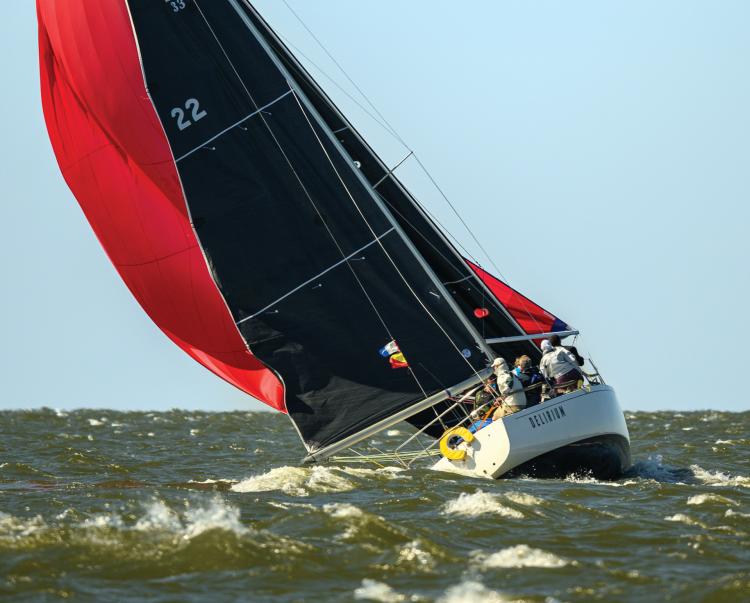
As sailors and outdoor enthusiasts, we can learn from such devastating events. In the New York Times article “‘Avalanche!’: Survivors Recount the Tragedy at Perry’s Peak” (February 28), a psychologist, backcountry skier, and snow safety researcher, Sara Boilen, offers insights about experienced skiers making risky decisions. These may ring true to sailors, too:
Familiar terrain: Boilen noted that experienced skiers are likely to feel safer in places they know well. Similarly, I’ve seen local sailors on the Chesapeake underestimate storm dangers in their backyards. Home waters feel safe, right?
Fleeting moments: When a skier sees the “an opportunity as scarce or fleeting, such as a long-awaited trip or fresh powder… (they) are more likely to downplay the danger.” In sailing terms, think about three-day weekends or the ocean race for which you’ve spent considerable time and money preparing. You don’t want to miss that because of a stupid weather report, right? How bad can it get?
Group think: Boilen noted how some in a ski group may be hesitant to speak up about potential dangers and how bigger groups of six to 10 give “the illusion of safety.” In sailing, have you ever hesitated to speak up when the others onboard seemed more experienced, or stayed mum so as not to be a downer? Have you felt an unspoken competition for ruggedness and toughing it out? Have you thought, “If the others aren’t scared, maybe we’re okay?” Larger groups raise your risk tolerance, which could spell disaster.
Newcomers defer to experts: As a backcountry ski guide, sailing instructor, or skipper, your expertise and decision-making will be trusted by new group members. In potentially dangerous situations, they hesitate to express their fears. They count on your instincts.
Sailing and avalanche accident survival share a common theme: human decisions may carry as much weight as storm or snow risks. If we as sailors are to take anything away from the avalanche tragedy, let’s remember that those who lost their lives were not newbies. They were experienced backcountry skiers, carrying required safety gear, and traveling with experts. Due to group dynamics, downplaying storm danger, the hope of skiing epic powder (in a low-snow season), overconfidence, or another reason we may never know, they made a series of ill-fated decisions. What a loss for their families and communities. My heart goes out to them.
Knowing the inherent risks to our sport, this sailing season let’s question our illusions of safety. If a situation onboard seems iffy (too stormy, too windy, incapable crew) and you think there’s a safer solution, speak up. If you question whether or not to wear a lifejacket, put it on. If a fellow crew member seems anxious, ask them what’s up. Listen to others’ doubts and act accordingly. Safety experts in any outdoor sport will tell you to trust your gut instincts. Listen to your hunches. When in doubt, don’t go out.
As our April 2026 issue hits the docks, the U.S. Sailing Safety at Sea seminar unfolds at the Maritime Institute of Technology and Graduate Studies (March 28-29); a one-day seminar will take place at the Mariners’ Museum in Newport News, VA, on April 18 (marinersmuseum.org/event/safety-at-sea-course). Find more ways to hone your sailing, seamanship, and safety skills at regional sailing schools.
Let’s have a safe, smart, spectacular sailing season together. See you on the water!
~Molly Winans


