Ospreys Are Back, But Trouble Looms on the Chesapeake
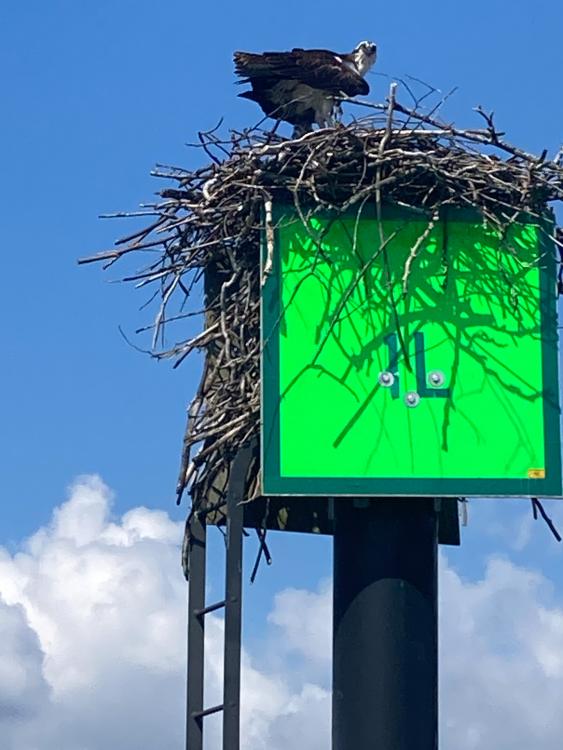
When sailors venture out for the first time each season, many scan the sky and channel markers for the return of old friends—harbingers of another Chesapeake summer. I’m talking about ospreys, those iconic Bay raptors that build their stick nests atop channel markers, nesting platforms, light poles, and the bare-topped pines along our shorelines.
Say “hello” as you sail by a channel marker, and take note when they shriek back, giving you an evil eye if you get too close. If there are offspring, Mom and Dad are screaming at their young: “Intruder alert! Get down flat in the nest!” It’s one of the fun parts of returning to sailing on the Bay.
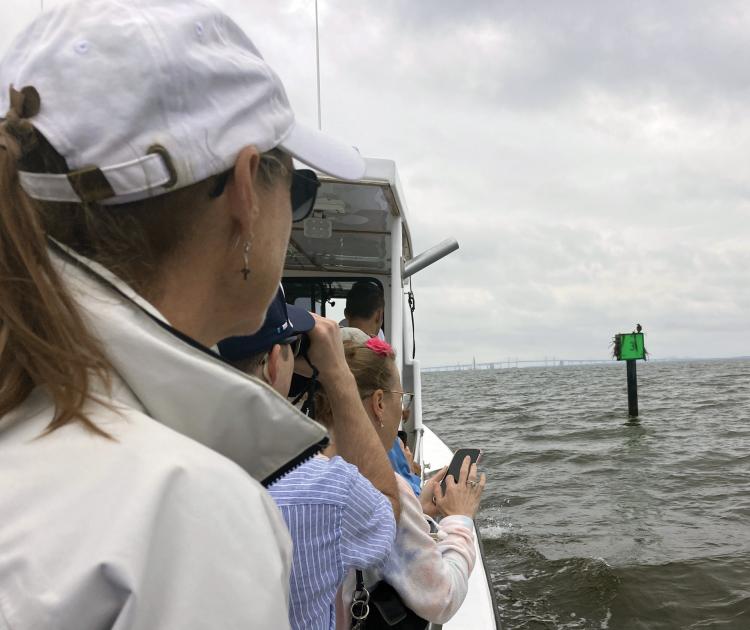
Early reports had some ospreys returning in late February from South America. By mid-April, most Bay osprey will have reclaimed their nests, reconnected with mates, and engaged in avian rituals: sky dancing, flirting, mating, and preparing for the next generation.
Take a look around. Soak in the aerial displays while you can. I say “while you can” because our osprey population is facing tough times.
Problem: The osprey population is in serious trouble.
A year ago, nobody knew how many ospreys lived in the Severn River watershed. In 2025, Eco-Ed Endeavors launched The Osprey Project to create a comprehensive database of the osprey population. We charted 79 nests, from the mouth of Lake Ogleton all the way up to Indian Landing near the headwaters.
Of these, we rated 50 nests as “active”—male/female pairs attempting to raise families. Soon after mating season ended in early May, something wasn’t right. Males should have been bringing fish to the nest three to five times per day. At that rate, we expected 55 juveniles by summer’s end. By mid-June, nests should have been full of hatchlings. That didn’t happen.
Most once-active nests had been abandoned. Few offspring survived. The river grew quiet, except for passing powerboats.
According to noted osprey researcher Bryan Watts of the Virginia Institute of Marine Science at the College of William and Mary, ospreys need at least 1.1 juveniles per nest to sustain the population. In the Severn River, that means our team of students and adult volunteers should have recorded a minimum of 55 successful juveniles by Labor Day. Last year, we counted only eight out of 50 active nests: a reproduction ratio of 0.16 birds per nest. That’s dire, far worse than DDT-era declines after World War II.
Why is this happening?
The most obvious reason is starvation from overfishing Atlantic menhaden. Ospreys eat only fish, and in southern, saltier parts of the Chesapeake, menhaden provide the bulk of their nutrients. Without them, the birds starve. This was the central point of a pivotal study by Watts’s team examining osprey starvation in Mobjack Bay.
Other factors may also contribute. Climate change could shift menhaden migration. Stormwater runoff may be another factor, as muddy floodwaters flowing from land into the river can turn waterways murky, especially in spring and early summer. Ospreys hunt by sight and they can spot fish from 150 feet up, but muddy water and algae blooms may make it harder for the raptors to see their next meal.
After years of weekly water-quality monitoring operations at 52 stations on the Severn River, my experience reveals that surface clarity is often below 0.6 meters, which is an EPA failing grade. In 2026, we’ll explore this possibility by tracking clarity at each nest to see if there’s a correlation with feeding and reproductive success.
To run these tours, Eco-Ed Endeavors partners with One More One Less of Baltimore to invite students on hands-on scientific expeditions. Together we explore and study the ecology of our waterways. For many students, it’s their first experience on a boat, soaking up Vitamin D and the energy of the great outdoors.
On a typical day, the students are a ball of energy when they shove off. After making observations, tracking data, and writing it down—because when you write data down, it becomes science—the ride home often lulls middle schoolers and teens into a restful nod-off.
Before their catnap, they learn about osprey behaviors, their reliance on fish and good water quality, and how human land-based activities can affect wildlife and waterways. They also quickly learn to identify male and female ospreys: males sport a plain white breast, while females feature a “necklace” of brown feathers that darkens with age. They know ospreys can live 20 years or more.
These experiences open students’ eyes to careers in scientific and maritime fields and show them that science can be fun and engaging. Adult volunteers also play an important role, helping chart ospreys during spring cruises in partnership with the Annapolis Maritime Museum.
How can you help?
You can assist by tracking osprey, especially in Baltimore’s Middle River and Annapolis’s South River. Send GPS coordinates of nests, and note how many ospreys have returned this spring, to EcoEd at [email protected]. Track a nest. Count a chick. Make a difference.
About the Author: Thomas Guay, a veteran river rat and musician with the Eastport Oyster Boys, founded Eco-Ed Endeavors to “turn students into scientists.” He is also the author of the historical novel “Chesapeake Bound” (McBooks Press). Learn more at thomasguay.com.


