When Your Backyard Benefits the Bay
The Chesapeake Bay is the largest estuary in North America, and its watershed covers 64,000 square miles and includes six states. Beloved by local sailors for its excellent and extensive cruising grounds, it is important to consider how we can positively contribute to being good stewards of our home waters. Improvement of water quality, reduction of nutrient runoff, and habitat restoration are all being addressed at the federal, state, and local levels, but what can sailors do on their own properties if they have available land? Plant native!
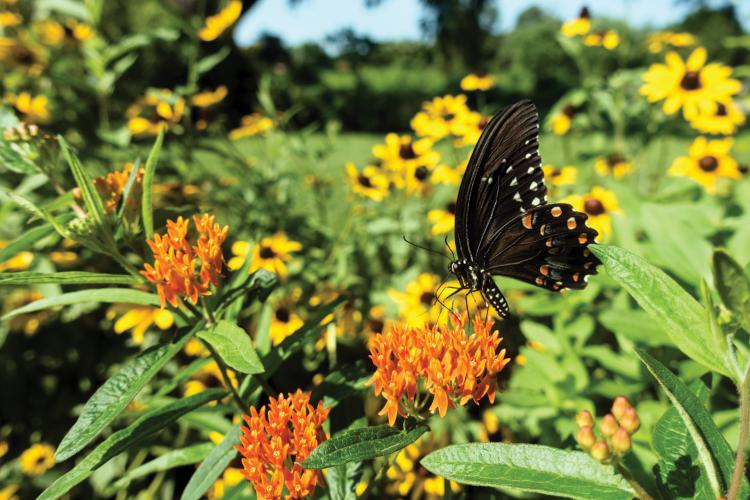
In the booklet “My Backyard to Our Bay,” produced by the Anne Arundel Soil Conservation District, the Watershed Steward’s Academy, and the Anne Arundel County Watershed Protection and Restoration Program, there are many concrete examples of ways that homeowners can control runoff by planting a Bay-loving yard with native trees, shrubs, and perennials. Plants native to the Chesapeake ecosystem are adapted to local soil types, rainfall, temperatures, and insects and diseases.
How do native plants impact water quality?
Stormwater runoff filtration: Deep rooted native plants act as natural filters. Reducing the amount of nutrient pollution to reach the Bay reduces algal blooms, which can result in hypoxic dead zones.
Soil stabilization: Native grasses, shrubs, and trees have more extensive root systems that can reduce erosion.
Reduction in fertilizer and pesticide use: Native plants don’t require special care and have the best chance of thriving in our watershed. This translates into less nutrient pollution and chemical runoff, which leads to better aquatic life for oysters, crabs, and fish.
Bonus impacts
Native plants have the added benefit of attracting native bird and pollinator species. A native oak can host more than 500 species of caterpillars and insects which are critical for 90 percent of bird species for feeding their young, even if they are not insectivores as adults. In contrast, nonnative species may have only 10 species of caterpillars or insects. Native plants provide nectar for hummingbirds, butterflies, and bees as well as nourishing and nutrient-packed berries and seeds. If you plant natives, you will provide critical food and habitat for our native wildlife and support biodiversity. Native plants are also gorgeous! Go big and lose the lawn for maximum benefits!
Resources
“Bringing Nature Home: How You Can Sustain Wildlife with Native Plants” by Dr. Doug Tallamy
“Landscaping with Native Plants” Maryland Native Plant Society
Audubon’s Native Plants database (enter your zip code)
Grant Giving organizations: Anne Arundel County Unity Gardens
~By Pamela Tenner Kellett
Find more environmental articles about the Bay.


