The Baptismal Rights of Boats - On Naming Your Sailboat
So, what's in a name? Well, for a boat it's everything; those letters you see affixed to the hull are a long-time tradition of the sea and transform the average sailing vessel into a succinct expression of an owner's wit, passion, humor, sarcasm, love, or faith.
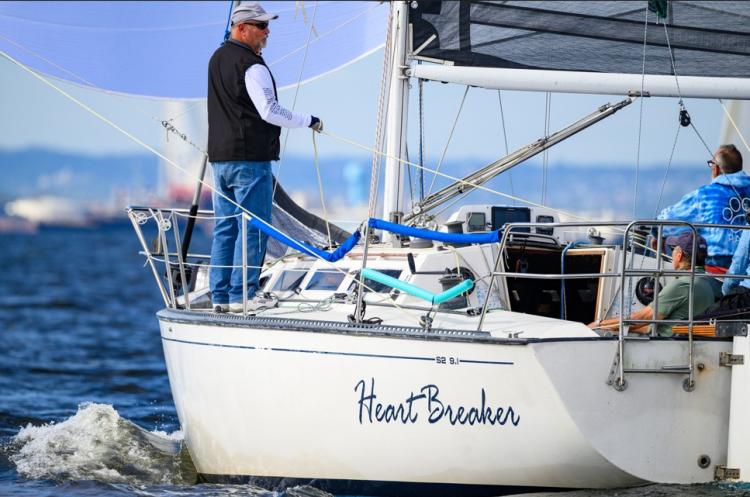
In ancient times the sea was a dangerous and unpredictable place. Boats were given names of gods or saints in the hope that the deity would intercede on the crew’s behalf and safely guide them to the next port. Sometimes it worked (Santa Maria), and sometimes it didn’t (Santo Cristo de Castello). In more recent times boats were named for the ladies those sailors left behind and to this day are still referred to with a feminine pronoun.
To non-boaters, this custom of giving boats a name may seem eccentric. I’ve been asked many times why it is done; someone even ventured, “Do you name your car and house, too?”
Simply put, names give a boat a unique character: Spray, Joshua, Suhaili, American Promise, Gypsy Moth IV, Wanderer, Trekka, Father’s Day. Each one evokes a memory of a struggle, a victory, a voyage well-sailed, and a place in the pantheon of sailing legends. Still others are names synonymous with disaster: Coyote, Edmund Fitzgerald, Exxon Valdez, Titanic.
It’s practical, too. That name on the transom or prow is an identifier that allows fellow mariners to quickly recognize and communicate with a vessel without having to describe its physical appearance. You wouldn’t want to hail another boat with: “Motor vessel Marlow Explorer 53C, this is sailing vessel Tartan 395, come in, over.”
Admit it: you've raced or cruised aboard other peoples’ boats and for your life you can't remember who the builder was or the year it was built, but you'll never forget the quirky boat name and why they picked it. If you have children, you probably agonized over their name choice for nine months—because it was an important decision, yes? Unbelievably, many buyers delay this consequential task until the moment they are signing the USCG Documentation application.
A good boat name has a good back story. Many are a pun on the profession of the owner: A Loan at Sea by a banker, Tomato Sloop for a chef, Sound Waves from a musician, or a CPA with Tax Seavasion.
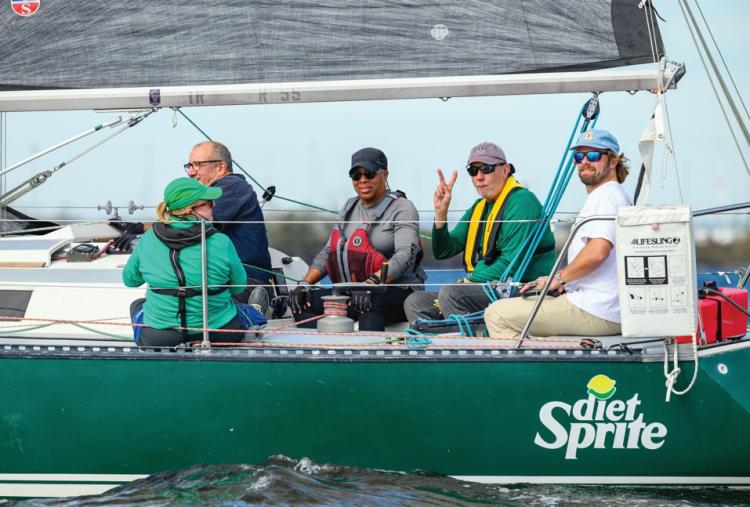
Many boaters push the boundaries of good taste in their vessel name selection. On the list at the National Vessel Documentation Center in West Virginia, you'll see Fuelin Around, Berth Control, Master Baiter, Happy Hooker, and… I should stop there.
If you are purchasing a used boat, there is a fair amount of archaic superstition involved in the re-naming process. Word is that Poseidon has his ledger of the deep and will express his ire with crews who do not follow the proper change protocol. To wit, you must conduct a renaming ceremony by removing all traces of the last name on the hull, dinghy, logbook, and life buoy. In front of witnesses, address Poseidon directly; imploring him to retire the old name and accept the new, while pouring champagne or rum into the water on all four cardinal points. This is to appease the four wind gods. With the remainder of the bottle give a hearty toast to the newly named vessel. If you hear no distant thunder or sudden gust of wind, you are free to affix the new name and proceed on your voyage.
If a new-to-you boat is in your future don’t delay this important task: the name search should begin forthwith and a short list ready for when you sign the papers.
A humble primer on the fine art of boat name selection:
1. Start writing names and their meanings well before you buy your boat.
2. The name should roll off the tongue and be suitable for the vessel.
3. Make it unique. To research how original your name will be, do a vessel search at USCG Maritime Information Exchange: cgmix.uscg.mil/psix/psixsearch.aspx.
4. Read your choices to someone you care about. Did they smile? Cross off the names that get a negative reaction.
4. Keep it short and easy to pronounce over a VHF radio. Otherwise, you'll have to spell it for everyone, especially bridgetenders.
5. Never use a name from a sunken or burned vessel—It has been retired.
By Robert Beringer


