Te Henua ‘Enana, the Land of Men, the Marquesas
Following a 3200-nautical mile passage from the Galapagos, a cruising couple arrives in the Marquesas…
“The outstanding universal value of [the Marquesas] is based on the combination of exceptional cultural and natural values… Sharp volcanic ridges, phonolitic needles, and steep sea cliffs shape dizzying island landscapes. The cloud forests that cover the tops of these islands are particularly exceptional. The archipelago is home to one of the most diverse seabird assemblages in the South Pacific and the Marquesas waters are a major pole of global endemism with Hawaii, Easter Island, and the Red Sea. Recognized as one of the world’s last marine wilderness areas, they are home to 40 iconic marine species, rays, sharks, and dolphins.”
~from the Marquesas 2023 Application for UNESCO World Heritage Site status
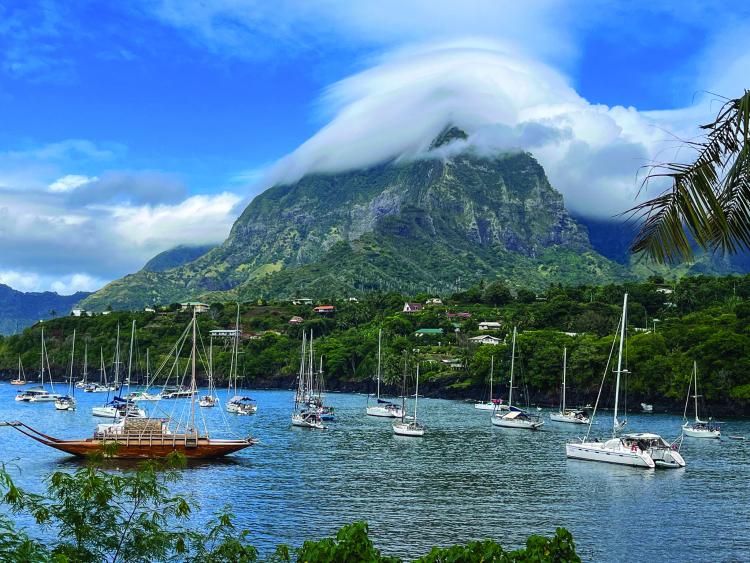
July 1842, not yet a writer, Herman Melville jumped ship in Nuka Hiva, leaving harsh conditions aboard the whaling ship, Acushnet. His time among the Marquesans formed the inspiration for “Typee,” his most famous work during his lifetime. (Sadly, “Moby Dick” wasn’t recognized as a masterpiece until after his death.)
Tired of how developed Tahiti had become, Paul Gauguin spent the last few years of his life in Hiva Oa, drawing artistic inspiration from the people, vibrant colors, and tropical scenery.
Thor Heyerdahl lived on Fatu Hiva, where he developed his hypothesis that South Americans may have visited Polynesia, leading to his 1947 Kon Tiki expedition.
Jack London, Robert Louis Stevenson, and more...
In more recent years, Crosby, Stills and Nash made every modern sailor even more familiar with the exotic islands as we all imagine a tale starting from a noisy bar in Avalon, sailing for the Southern Cross, lyrics stuck in our brains: “On this heading lie the Marquesas. We have 80 feet of waterline nicely making way.”
Thirty feet short of that, we departed Santa Cruz, Galapagos, for the 3200-nautical-mile voyage to Hiva Oa. Starting only slightly south of the equator, the key is to get south into the trade winds before heading west. Once you reach those steady breezes, it’s a nice straight shot. There are trade-offs to be considered: sailing farther south can mean fewer squalls. However, you might be giving up the benefits of the equatorial current. Electing to stay with the current, we had a fantastic downwind sail in 10- to 20-knot breeze and long-period swells, completing the voyage in 17 days with only a squall or two.
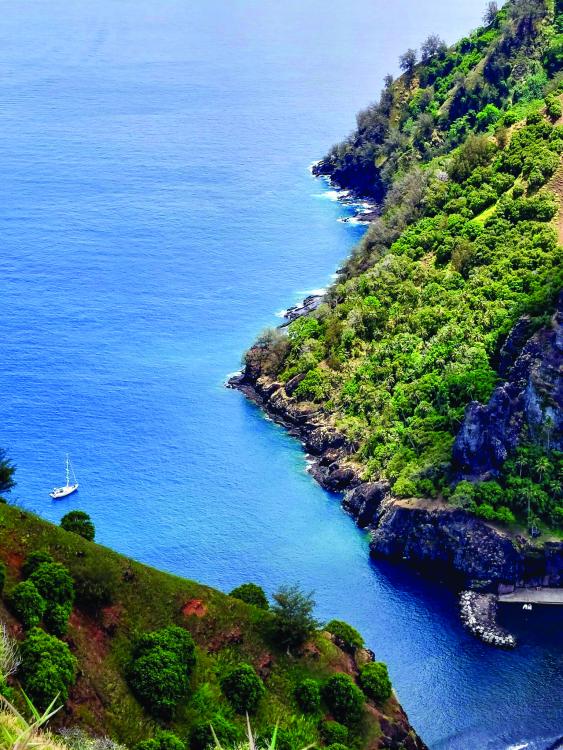
Anchoring in Tahauku Bay, Hiva Oa, we began the clearance process into French Polynesia. Space inside the breakwater is limited, particularly if the supply ship is scheduled. We anchored outside; the holding was fine, but it was rolly at times. Our experience here became the barometer for the rest of our circumnavigation. Every time we looked at a somewhat questionable anchorage, we would proclaim, “Well, it’s not Hiva Oa.”
Ashore, Hiva Oa offers great exploration opportunities: amazing tiki statues, waterfall hikes, remote beaches, and the Gauguin Museum, as well as a small market for provisions and a chance for some meals ashore before exploring the other islands. Not to mention abundant pamplemousse, which were big, juicy, and plentiful. Enjoy them; they get smaller, less juicy, and more expensive as you sail farther west across the Pacific.
Beyond Hiva Oa, beautiful, secluded anchorages await. The Marquesan Archipelago is about 200 nm long; sailing and anchoring is straightforward, accompanied along the way by dolphins and gulls. We made our way down to Fatu Hiva first and back north with Nuka Hiva as our final stop before departing. Each island affords great opportunities for exploring: hiking to the waterfall on Fatu Hiva, relaxing on the beach time on Tahauta, and searching for Manfred, who makes homemade chocolate on Ua Pou with a refreshing stop at the waterfall on the way.
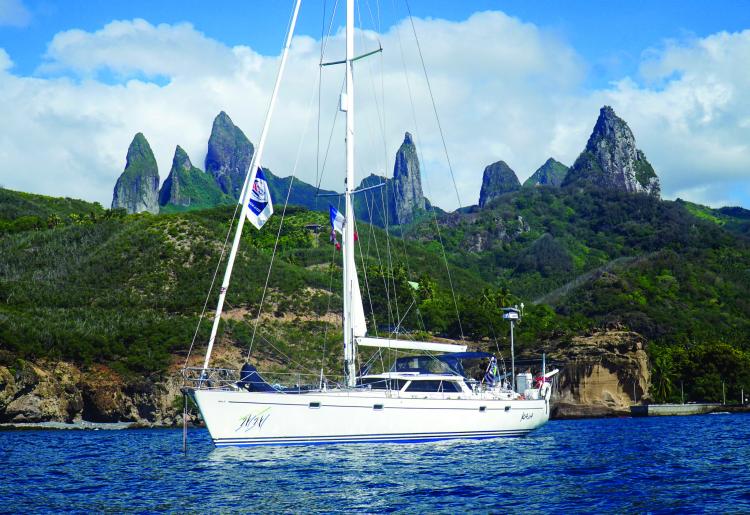
Nuka Hiva offers a good stop before sailing west to the Tuamotus. The anchorage is large with good holding and lots of room. There are a number of markets, restaurants, and a few services. Fuel is available at the large bulkhead, on the east side of the bay.
Once you have provisions and fuel, before departing Nuka Hiva, a hike to Viapo waterfall and swimming in the pool at the bottom is not to be missed. The falls are spectacular, dropping 1000 feet to a pool carved in the basalt. Making the short sail four nm west to Daniel’s Bay makes for easy access to the trail. From here, you can sail beyond to the Tuamotus.
Even in the short time we were here, it’s easy to understand how the Marquesas inspire great literature, art, and adventure.
Planning tips:
Refueling in Nuka Hiva can be a challenge, particularly if there is any swell. The process starts with contacting the fueling station on the radio to ensure they are available. You need to anchor stern-to at the bulkhead, throwing stern lines to attendants on shore. Toss another line across, and the attendant will tie the fuel hose to the line so that you can pull it back and begin fueling. You’ll need to dinghy to the bulkhead and pay for the fuel.
About the author: Andy and Heej Wescoat completed a circumnavigation aboard Kaja, a 2001 Farr 50 pilothouse, with the World ARC in 2025. Learn more about the couple and how they chose crew.


