Finding Crew for Ocean Passages – Experience, Compatibility, and Adaptability
Whether you are crew or seek crew for offshore sailing adventures, veteran skippers offer valuable insights about the importance of crew selection. In part three of our Offshore Series, I continue my conversation with circumnavigators Andy and Heej Wescoat (find parts one and two) and also interviewed a few other skippers, who either cruise or race offshore in vessels ranging from 36 to 52 feet.
Crew options for circumnavigators
Andy and Heej were prepared to doublehand Kaja, their Farr 50 pilothouse, with the World Atlantic Rally for Cruisers (ARC). Adding crew became a bonus, providing more rest and shared adventure. As avid racers, the Wescoats had an extensive network of competent sailors who could crew. Matching individuals with passage requirements was key. Andy noted that they chose crew with offshore and watch experience for long passages, while less experienced sailors could join for coastal hops.
They also met more sailors through ARC. Some had joined the rally for just a portion and decided to continue. Others were using the rally to travel globally, moving from boat to boat.
One of those known sailors was a young woman.
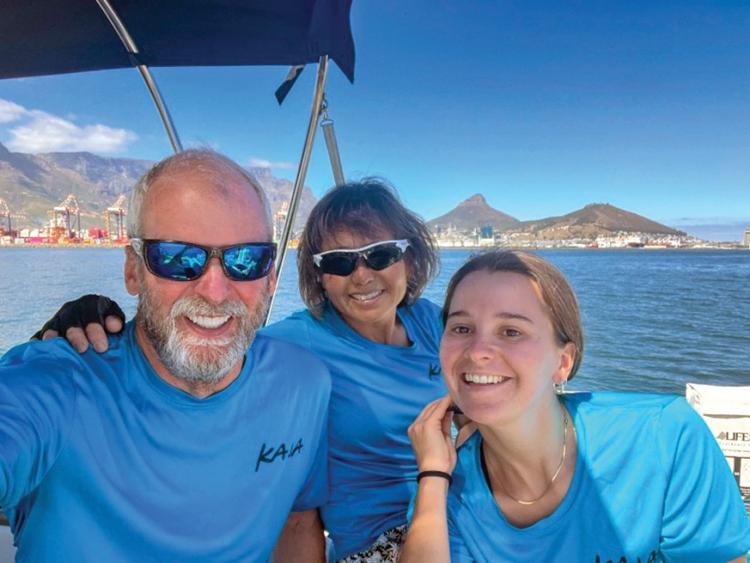
“We met Mahina early in the rally. When we reached Cape Town, she was looking for a berth across the Atlantic. She had sailed on other rally boats and her family’s boat in the Mediterranean. We were very happy she joined us.”
Initially Mahina doubled-up with Heej from Cape Town to Namibia to learn her way around Kaja, a Farr 50. She took her own watch and cooked during the 3000-nautical-mile voyage to St. Helena and Recife, Brazil.
Andy and Heej noted that many ARC boats found crew through online boards, including the World Cruising Club’s list. Generally, this approach was successful, though occasional mismatches occurred. They emphasized the importance of meeting crew beforehand, checking references, and setting clear expectations on expenses, boat duties, watches, and alcohol use.
Crew for offshore racing teams
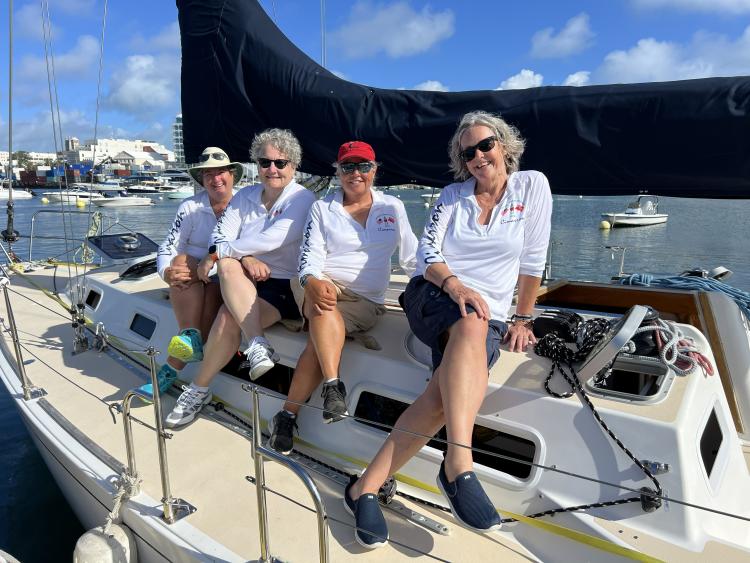
Captain Lynn McClaskey, an Annapolis-based racer on her J/110 Cimarron, values crew compatibility over experience for offshore races such as the Mustang Survival Annapolis to Bermuda or Annapolis to Newport Races. She is a firm believer that the crew must bond before leaving the dock.
Lynn has different crew each year and uses a two-step process when recruiting for offshore races. In step one, crew must demonstrate: investment in themselves, taking courses in safety and first aid; commitment to the whole passage, including helping to prepare the boat; a realistic view of life onboard, heeling, cold, wet; and the ability to take feedback.
During this first step, Lynn says she gets a vibe. If the candidate feels like a good fit, she moves to step two, where she asks for relevant experience, such as navigational skills, including those in reduced visibility; safety practices; special skillsets, such as weather; and personal references, since sometimes personalities change offshore.
Lynn reiterated that there are no wrong answers. She’s just looking for the right fit. It must work for both parties. As the skipper, she decides what she is willing to accept. Crew can decline. There should be no hard feelings. “Something about trusting your life to another person…”
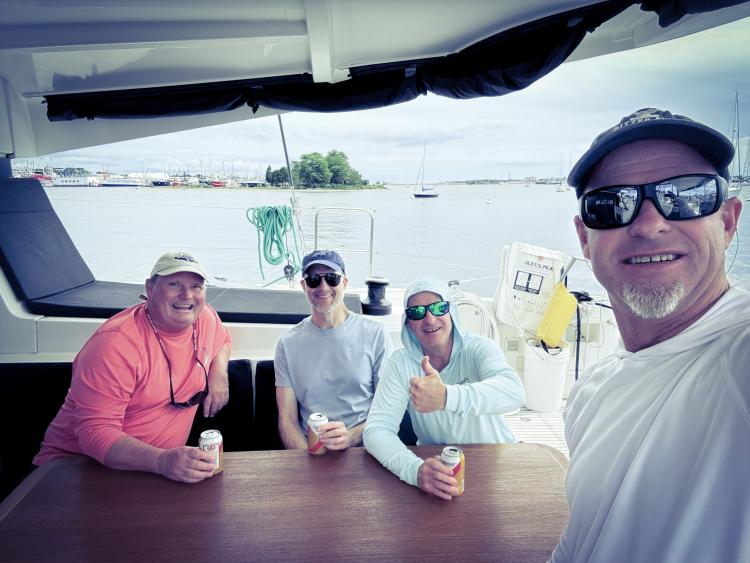
L to R: Mike Jordan, Keith Riniker, Adam Yearwood, Chris Yearwood
Flexible crew for offshore passages
After a brief career in the U.S. Merchant Marine, Chesapeake-based Captain Adam Yearwood enjoys sailing his 42-foot Lagoon catamaran Starsplitter III and utilizing his 1600-ton USCG license skippering chartered yachts or providing private instruction. He has sound opinions about crew selection.
“Crew must be flexible in two areas: attitude and timing. Having crew with offshore experience is beneficial, but more important are their adaptability and cooperation in close quarters. Flexibility and helping without being asked are important attributes.”
Adam also prioritizes crew who have flexible schedules. Arranging crew changes mid-voyage can be difficult, with unpredictable factors such as weather and crew transfer locations.
When asked about watch experience, Adam described a recent offshore passage from Annapolis to New Bedford, MA: “We had three experienced offshore crew including myself. Our fourth crew had limited sailing familiarity and no offshore experience. For watches, I suggested the fourth to shadow the other crew so that we would not be depending on him. When he suffered seasickness, it didn’t impact the rest of us.”
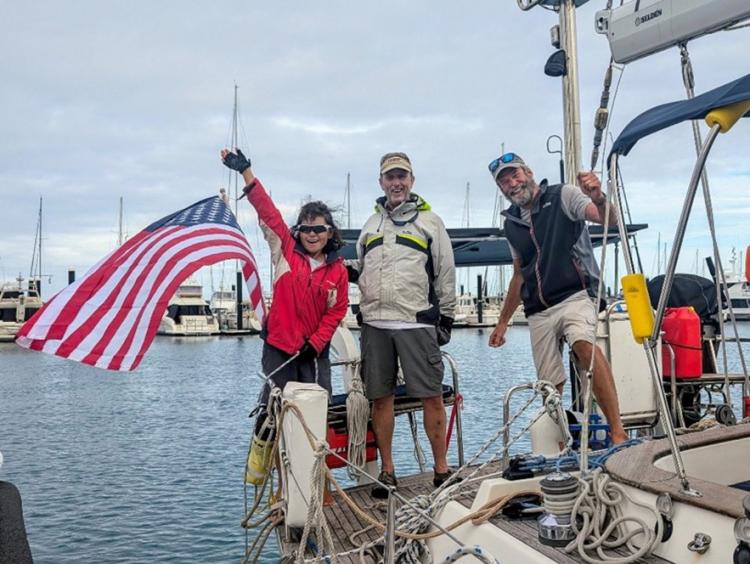
Crew for ocean passages
Michael Delage and Glenda McDonald agree with the importance of flexibility in attitude and timing. Since 2021, they have been cruising long-term on their Gozzard 36 Innisfree, from Canada to the Caribbean. Last summer, they crossed the Atlantic Ocean and began cruising the Mediterranean.
When choosing crew, they prioritize knowing how someone handles adverse situations and close quarters. Michael explained, “We’re a small monohull, so it’s tight below. For our passage to Antigua, our crew was a college friend whom I knew well. He was a sailor and lacked offshore experience, but he was also an engineer and could help with repairs.”
Glenda emphasized two additional considerations about their crew: 1) he committed to preparing himself with safety training and practice drills, and 2) he was flexible with timing.
“The 2022 Salty Dawg Rally was delayed two weeks, and many boats had challenges with crew not being able to wait. In some cases that meant complete cancellations. We were fortunate that for our crew the delay was just part of his adventure.”
Crew for long passages
Beth and Peter VandeGeijn annually cruise 5000 nm on their Passport 515 Lasata, typically between the Chesapeake and the Caribbean. They recruit crew for passages over 1500 miles.
Beth advised choosing crew carefully, preferably known friends with proven skills. Any new crew should be thoroughly vetted, with expectations clearly stated. She emphasized an honest assessment of skills to prevent safety issues or damaged friendships, noting that strong emotions can arise during tough passages.
She says, “Crew should be an asset, not a liability.”
Beth also recommended practicing with crew on short Chesapeake Bay trips, using challenging weather and overnight sails as preparation for longer offshore passages.
Additional considerations for crew and skippers
The Wescoats added further considerations for both crew and skippers. They recommend all crew have evacuation insurance and advise skippers to consult their insurance, especially before hiring paid crew. They cited an example where a medevac flight for a badly injured sailor cost $150,000 from Niue to New Zealand.
As a regular practice, Andy and Heej require each crew member to submit a medical history form along with copies of health and evacuation insurance cards, sealed in a labeled envelope.
Andy described, “All the envelopes go into the ditch bag. If needed, I can hand the envelope to medical professionals. At the end of the voyage, I return all envelopes to the crew.”
Finally, with a twinkle in his eye, Andy offered one more thought about crew selection, quoting author and three-time circumnavigator Eric Hiscock: “The only way to get good crew is to marry one.”
Andy did that, as did a few others I interviewed. As did I.
About the author: Captain Cheryl Duvall is a USCG Licensed Master Inland 100 GRT, and president of the Chesapeake Area Professional Captains Association (CAPCA). She enjoys cruising on her Gozzard 44 Belle Bateau. Email her at [email protected].


