Command and Seamanship Training at the US Naval Academy and Why it Still Matters
In an era of cyber warfare and autonomous drones, one might wonder why the United States Naval Academy still invests in the visceral, wind-swept reality of the Command and Seamanship Training Squadron (CSTS) program. After all, modern warships are increasingly managed via glass bridges and remote sensors.
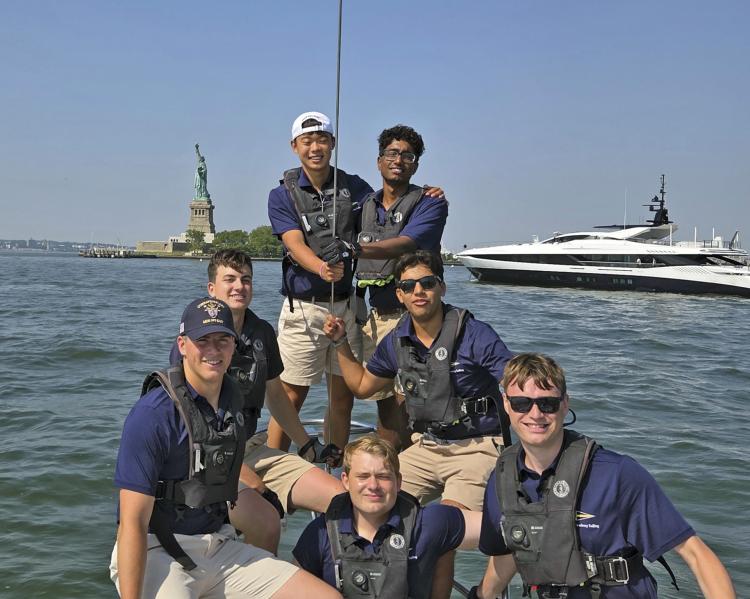
Yet, every summer, the Navy 44 sailing vessels slip the lines in Annapolis and carry Midshipmen into the temperamental environment of the Chesapeake and Atlantic. This isn’t just a nod to tradition; it is a vital laboratory for the most difficult skill to teach in a classroom: the weight of command.
This program is a marriage of Naval structure and civilian expertise. Like any good marriage, both partners need to give 100 percent to be successful. Likewise, both partners need to benefit and grow from the relationship, fostering a culture of victory. The civilian sailing community has supported the CSTS program through volunteer service since its inception in 1945. In return, these sailors are given unique training opportunities to expand and build their skills.
LTC Sak Sakoda, USA (Ret.), is one of the program’s long-time volunteers. He served as the fleet captain for several years and noted that mentoring midshipmen in leadership is rewarding. Serving his country is something he is all too familiar with, as he retired after 21 years of service in the Army.
Sak believes, “Though sailing is great fun, the fulfillment of mentoring future officers on leadership is worthwhile, and why I serve in the program.”
CSTS is a leadership program disguised as sailing. In most cases, midshipmen begin the four-week training with little knowledge of sailing, navigation, planning, provisioning, and electronic communications. They are exposed to these tasks at a fast pace during the first week. However, the program’s greater aim is to build leadership skills in team building, problem-solving, and dealing with hardships at sea.
The key is that learning occurs outside a traditional classroom, fostering a sense of shared purpose while building small-unit leadership competencies. CSTS places Midshipmen in leadership positions, allowing them to be challenged, enduring nature’s heat or cold, wind, and waves, while tired and hungry. In doing so, they are better prepared for leadership once commissioned and assigned to the fleet.
George Prielipp, an Ensign who has participated in the program for the past four years, remains actively involved as a fully qualified skipper. The program has influenced George’s command style and provided him with opportunities to test his decision-making. This is experiential learning at its best.
In George’s words: “CSTS provides Midshipmen the opportunity to navigate leadership as a small team. Now, there are guide rails in place in the form of the Skippers, XOs, and other boats in the squadron, all of whom are working to develop the Midshipmen into the leaders our Navy needs. What makes this such a profound experience for them is that once they set sail for their destination port, their team is pretty much alone. All together, each mini team must coordinate with each other to make the transit safely.”
Forming leaders who can make timely, high-quality decisions in the fleet through experience gained in the CSTS program benefits everyone and underscores its critical role in developing future Navy leaders.
The program depends on qualified sailing experts willing to learn the “Navy” way and promote the program’s ideals. If this is you, please consider giving your time and talent to the ideals.
For more information, follow USNA Offshore Sail Training on Facebook, call the Robert Crown Sailing Center at (410) 293-5614, or visit the CSTS website.
~By Frances Schoening


