Winterize Your Sailboat or Pay the Price
A learning curve is less of a wild ride when others cushion your screw-ups. Do-it-yourself winterizing and long-term layup projects are good examples. Avoid common mistakes and learn from others if you want to turn the key next spring and have all systems go. It can seem like a hassle to spend a lot of time on a boat you won’t be using for a while, but it will pay dividends come spring sailing time.
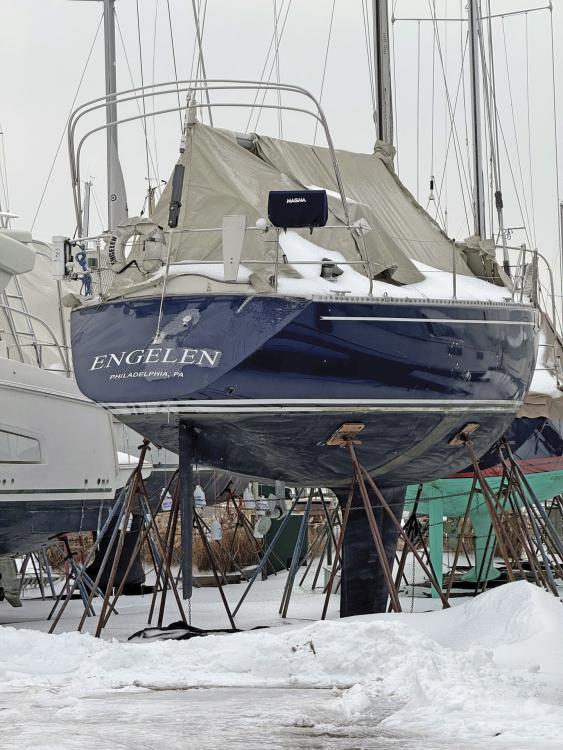 Engine Room
Boats don’t like to sit, and neither does fuel. Add some stabilizer, and fill your tanks about 7/8 full which keeps the diesel from growing funky stuff but still leaves room for expansion when it gets hot. Gasoline breaks down quickly, sometimes in a matter of weeks. The lighter elements flash off leaving the sludgy varnish to clog jets and injectors, so a simple thing like bad fuel can lead to costly problems later.
Don’t use straight antifreeze (without dilution) when changing the coolant. Antifreeze should be mixed with water to achieve a coolant ratio between 35 to 65 percent. Exceeding recommended concentrations can cause the silicate corrosion inhibiting additives found in most ‘aluminum-safe’ antifreezes to drop out of suspension, forming a greenish gel or goo that clogs the radiator and reduces heat transfer.
Some people like to add a lightbulb to warm the engine room throughout the winter, but that rarely produces enough heat and is a risky strategy if the power goes out. Cold is not the only problem. Temperatures in a closed-up boat that’s laid up during hurricane season through a Caribbean summer can reach into the hundreds. Find a way to vent the boat without leaving large openings (see “critters” on the next page).
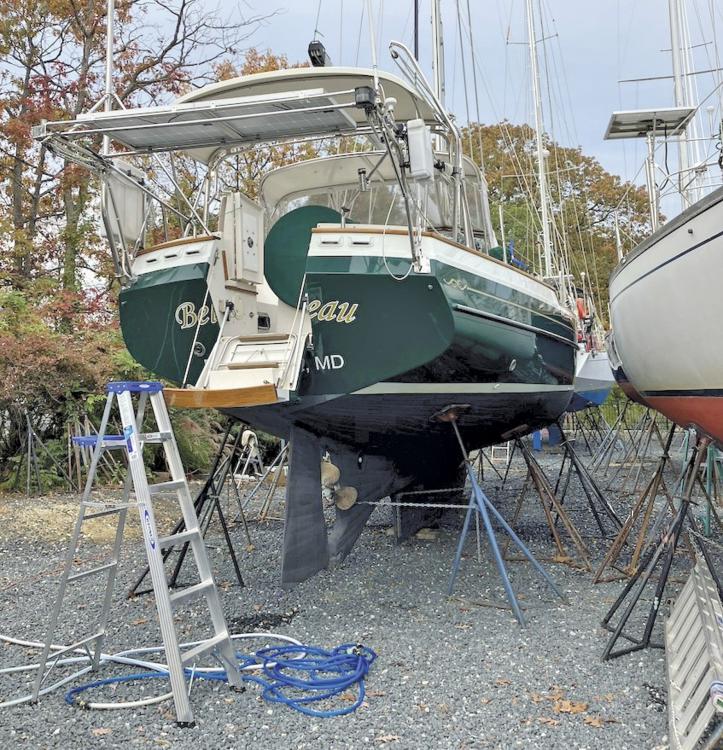 Sinking on Land
The ideal way to store a trailerable boat is in a covered, climate-controlled area such as a warehouse or a garage. Since that’s not always practical, some boaters toss a tarp over it, flush the outboard, and hope for the best. There are two problems with that. First, the trailer wheels take quite a static load for an extended time, so it’s best to support the weight of the boat in some additional way. Second, rain and snow always manage to seep around any cover and down into the boat. If you must store the boat outside, remove the drain plugs and store it at an angle with the stern down so the water can drain; or it will freeze inside and cause flooding in a thaw so the boat will virtually sink on land.
If you cover the bottom of the boat as well as the top, your antifouling paint will grow funky stuff beneath the tarp. Before putting on any cover, pressure-wash the hull, clean growth off the props and shafts, clean all thru-hulls, and disconnect and remove the batteries which can be put on a trickle charger at home.
Climate Control
Closed boats create a microclimate all their own, so think about humidity levels. Moisture, darkness, and little airflow create an engraved invitation for mold and mildew that will grow on everything including floorboards and the back sides of drawers. It’s unhealthy to breathe this air. It makes the boat smell, not to mention the potential for the condensed moisture corroding everything inside. When in doubt, air it out, or you’ll come back to a science project.
Electric dehumidifiers are a good start to keep the humidity around 65 percent, which is a challenge during rainy winters. Wipe down surfaces with a mildew spray, and add chemical moisture absorbers to lockers.
 Critters
It’s not just freezing or searing temps that can wreak havoc on a lonely boat. Rats are furious interior re-decorators and can eat a boat from the inside out. They’ll devour the upholstery, wiring harnesses, engine hoses, PFDs, and waterski boots. Uninvited guests have a taste for everything and what goes in one end comes out the other, so there’s that to clean up as well.
Animals can get in a boat in a variety of creative ways including crawling in the exhaust pipes of boats stored in the water and chewing through coupling hoses and nesting in the interior. Any exhaust over three inches is at risk of becoming a highway for muskrats, otters, and reptiles, which is why there is a line of exhaust guards and snake screens for sale. When your boat becomes a racoon condominium, spring cleaning is no picnic. And it’s not just the furries that pose a problem. Wasps can set up house anywhere including in a water tank vent.
Don’t Forget
Fresh water systems are often overlooked when laying up a boat. Pumps, lines, and strainers can freeze and burst. If freezing temps are suspected, run antifreeze through the fridge, ice maker, and AC pumps. Draining the water heater and/or running non-toxic antifreeze through the whole freshwater system is necessary in cold areas. Don’t forget the heads. Pump out the holding tank, flush the heads with fresh water to prevent funk, add antifreeze, and pump through the holding tank, y-valve, macerator, and discharge hose. Sewage hoses can freeze and burst which is a mess nobody wants to face next season.
The devil’s in the details, so before next season’s launch, check fire extinguisher levels, flare expiration dates, and medication conditions in the med kit. It’s easy stuff to review in an afternoon and ensures that the Band-Aids are usable when you need them next year.
Unless your boat is hundreds of miles away, the best way to guard against unexpected situations is to visit it once every two weeks, do a visual and smell check of all compartments, run the engine if the boat is in the water, turn on the electronics to guard against condensation, and change out chemical dehumidifiers.
Plenty of Resources To Help
There are dozens of checklists online on winterization projects, whether for large in-water yachts or trailer boats with outboards. If you’re nervous about the process, ask a mechanic or a boatyard to assist. You can pay a little now or a lot more later. Don’t let your winter turn into a tale from the bilge.
~By Zuzana Prochazka


