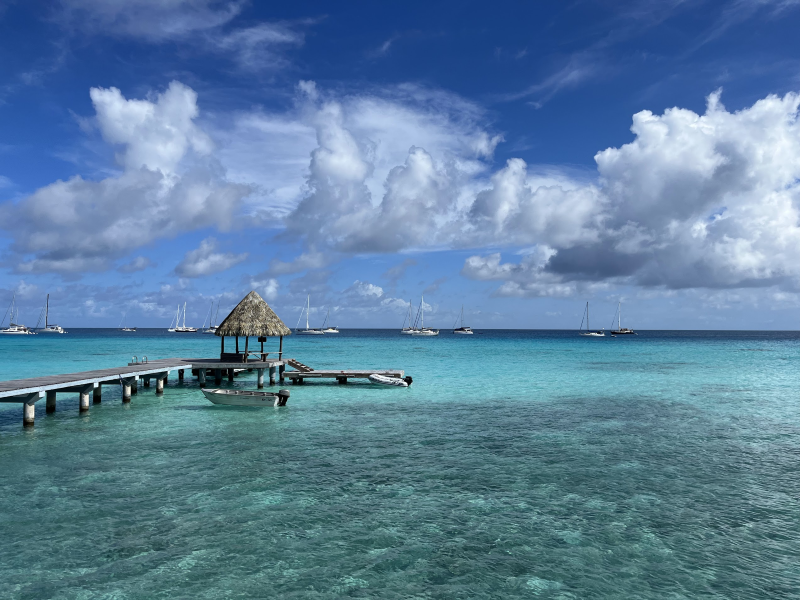
Bluewater cruising in French Polynesia, our first stop, the Marquesas, rewarded us with dramatic, steep, lush green, volcanic island slopes. In stark contrast, only a three- to four-day sail to the southwest, the Tuamotus offered us nearly 80 atolls with low lying, white sand beaches, swayback palm trees, and spectacularly clear, blue-green water.
Determining which atolls to explore
With so many atolls to be explored, our initial Type-A planning had us researching how many we could squeeze into our limited window. While there are 80 atolls, only 20 or so are commonly visited by cruisers. Occupying a little over 300 square miles, they are relatively close. Part of the route planning involves hop-scotching downwind from one atoll to the next, unless you fancy beating into three- to six-foot seas to make your way back east.
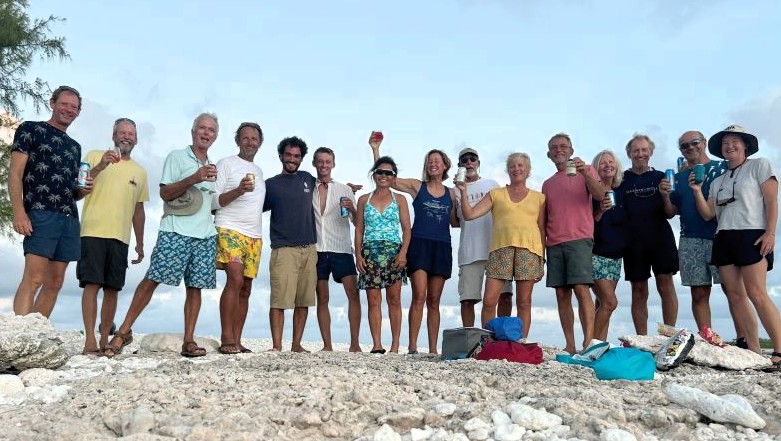
We initially thought of visiting four. However, we soon concluded we would burn more time sailing between the atolls than we would spend enjoying them. Timing the strong currents in and out of the lagoons and navigating the narrow, coral-strewn inlets dictate your arrival and departure times. Add to that the time transiting between atolls and waiting for good weather windows. In the end we visited two; yup, just two—Fakarava and Rangiroa—and we enjoyed them both thoroughly by snorkeling, lounging on the beach, and socializing at happy hours.
The magic carpet of marine life and coral
One particular harbor
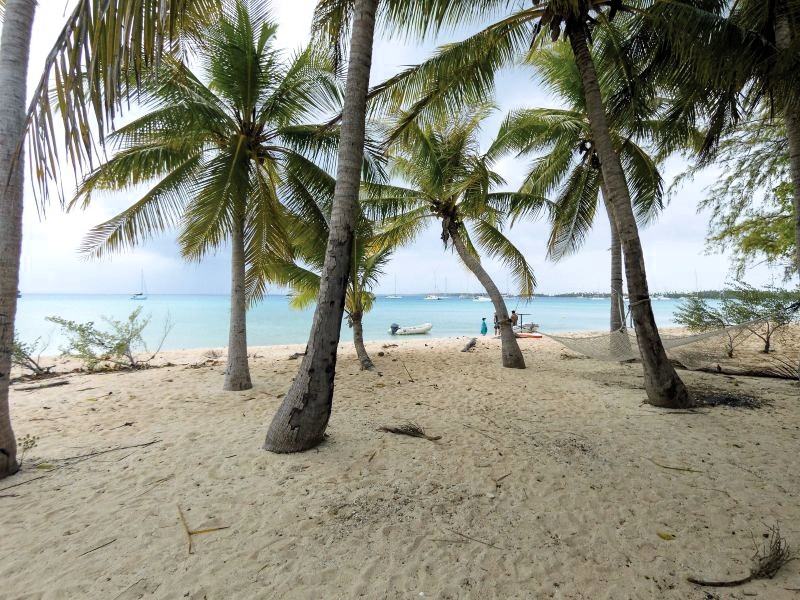
As a child of the ‘60s, “Gilligan’s Island” was a big part of my youth. The beaches and big palms are stunning, bringing to life my imagination from 50 years prior. Each atoll offers opportunities for swimming and lounging on the beach. The very nature of these lagoons—tradewind breezes and protected waters—provides great conditions for kite surfing and winging. Of course, wherever there is a group of sailors, there is likely to be an evening happy hour and maybe a bonfire on the beach.
Towns generally have a small market, a few nice restaurants, and a small resort, offering a good chance to relax and enjoy. On Rangiroa you can enjoy a cocktail at Josephine’s and enjoy watching dolphins jump in the Tipiuta Pass as the tide changes. Poisson cru is the signature dish of French Polynesia: fresh raw tuna, lime juice, coconut milk, and diced vegetables. And, of course, Rangiroa being French, we were able to score fresh baguettes each morning.
Offshore, the ocean runs one to two miles deep—a staggering thought given the visible land is only a few meters above sea level. The protection you get behind a scant piece of land and a large coral reef makes for comfortable anchorages and a great opportunity to enjoy a unique part of the world. There were a few nights with big wind and waves when the sea would roll over the lowest part of the barrier. And yet, we swung comfortably at anchor within. Reminiscing about the Tuamotus, Jimmy Buffett’s “One Particular Harbor” comes to mind: “And there’s that one particular harbor/ Sheltered from the wind/ Where the children play on the shore each day/ And all are safe within.”
Whichever atolls you decide to visit, you will not be disappointed.
Planning Notes:
- Accessing and enjoying the pristine anchorages require unique seamanship skills. Navigation aids are virtually nonexistent, and electronic charts in this part of the world lack accuracy and precision. Satellite imagery is pretty good and shows some coral head detail but not enough for comfort when you draw seven feet, six inches; so we highly recommend daylight, eyeball navigation.
- Current through the lagoon passes can reach five to six knots as the tide passes through the small inlets in the reef. You will want to familiarize yourself with the “guestimator,” a tide estimating tool for predicting slack tides (thefloatinglab.world).
- Anchorages with good holding are plentiful. However, coral heads (also known as bommies) abound, and you will want to float your chain. If you don’t, there is a fair chance you’ll end up wrapping your chain around one when the wind and/or tide changes. Floating your chain is not hard to do. Once you determine the amount of chain you want out, attach three fenders spaced at 25, 50, and 75 percent along the length of the chain. Use good sized fenders, and your chain will float nicely above any potential obstructions.
- While there are a couple of markets on Rangiroa and Favarava, don’t plan on provisioning. Available stock is highly dependent on the timing of the supply ship. It’s much better to stock up in Nuka Hiva.
By Andy Wescoat
About the author: Andy and Heej Wescoat completed a circumnavigation aboard Kaja, a 2001 Farr 50 Pilothouse, with the World ARC in 2025. Stay tuned to hear about their next adventure.
Read more by Andy Wescoat: Considerations for Choosing the Right Sailboat for Long, Offshore Journeys.


