Fall championship regattas are in the rearview mirror. Daylight is in short supply as we approach the winter solstice. For most Chesapeake sailors it’s time to take a deep breath and enjoy the holidays with friends and family. It’s the perfect time for some physical and mental recovery.
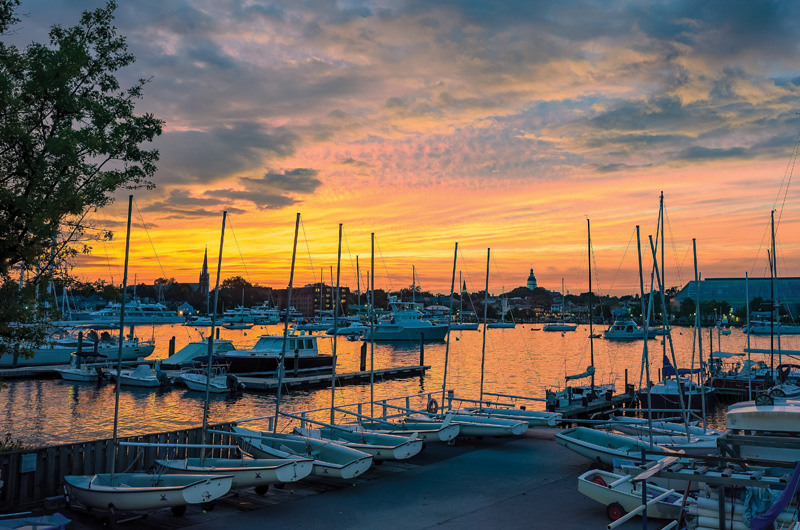
The cycle of campaigning a small boat: racing and recovery.
As much as we dinghy sailors love sailing, recovery is an important part of the cycle of campaigning a small boat. Short-term recovery is a key part of any regatta, especially major events that last a few days or even a week. During those events, your next day of competition starts as soon as you get off the water. You need to get right to recovery food and hydration, mentally processing what you need to tackle so that you are set up right for the next day, and ensuring you get an optimal night of sleep.
But longer-term recovery phases are important, too. If you have focused on physical and mental training and on-the-water practicing as a lead-up to a major event, you have gone through several phases on your way to your goal. Phases in different sports vary somewhat, but they share elements. For example, marathon runners work through base, build, peak, and taper phases before running 26.2 miles successfully. Then, they work through a recovery phase. Just because you have run a marathon doesn’t mean you get right back out there and keep at peak training; taking time to recover properly helps you heal mentally and physically so that you’re ready to prepare for another event.
For sailing, training for a big event—our “marathon”—works through similar phases. If you target a fall championship, that means that in the spring you start working on boathandling; you build to active practice and training sessions with other boats and on to practice regattas, and it’s focus time as you head to your big event. Concurrent with the sailing side of things, you ramp up your physical training and ideally your mental preparations (running the gamut from practicing on-course focus to reviewing the Racing Rules of Sailing). High school and college sailors focus hard for their spring and fall seasons, following similar processes.
All of that takes a lot of time and energy, and it can take a toll. That’s where the recovery phase comes in. Physically, dinghy sailing is a quirky sport. It overemphasizes some muscles (I’m talking to you, quads), it often encourages bad posture (hiking position is not the greatest), and it demands we place some pretty odd loads on our joints.
Take some time to rebalance your body. Identify any potential injuries. To power through a season of sailing, we may convince ourselves that a nagging pain or discomfort isn’t that big of a deal, that we can get through our championship with a muscle or joint not being quite at 100 percent. But wouldn’t it be great if they were at 100 percent? Now’s the time to address those. Depending on the severity, a doctor, physical therapist, massage therapist, or other expert can help you heal.
The recovery phase is also a good time to reset your physical fitness program. You don’t need to push hard, but make sure you cover strength, cardio, and stretching. We can easily get out of balance on these elements during the peak of sailing season, but all of these are important for your long-term sustainability in health and on the racecourse.
Mentally, a little time away is important, too. Balance in our lives can be really hard to find these days, and it’s so easy and tempting to put too much emphasis on what success in regattas means. Acknowledge how you feel about your regatta or season, and step away for a bit. Help your brain shift gears by reconnecting with friends and family, reengaging with another hobby, or simply taking a walk in nature. Stepping away for a bit can make a sport even more enjoyable when you dive back in.
As part of the mental recovery process, you can set some groundwork for your next season or campaign toward a goal regatta. Review your previous effort honestly; no self-criticism, but simply point out what worked well and where you can improve. This will help you identify what you’ll focus on in your next effort. Key to this is remembering that your performance does not define your worth.
I promise, the sport will still be there after you take a “time out,” no matter how long you need. Enjoy finding mental and physical balance, and we’ll all be back on the water soon!
by Kim Couranz
About the Author: Kim Couranz has earned several national and world titles in Laser Radials (ILCA 6), Snipes, and Lightnings. She has also raced J/22s, J/24s, and Ynglings on an international level.
Find more sailboat racing stories.


