Arundel Rivers Federation Programs Go Beyond Exploration and Enjoyment of the Chesapeake
With autumn comes a return to school, but at Arundel Rivers Federation, June, July, and August are a critical time for learning. Arundel Rivers partners with camps and groups around the South, West, and Rhode Rivers for our Summer of Science program every year, exploring local parks and campgrounds to understand the health of our waterways and our wild and interconnected world.
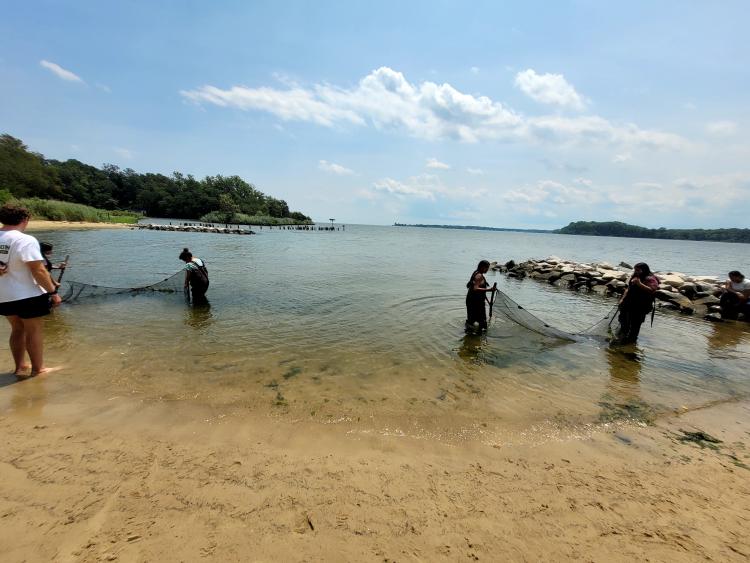
In a world that’s highly connected to the internet and not to our land and waterways, more kids than ever are unfamiliar with, and are frequently frightened by, the outdoors. To heal and protect our rivers, which is the only way to ensure a future of bountiful harvests, safe swimming, and joyful voyages, every person who impacts the river needs to care about it—and that’s everyone. Children are capable of being the passionate and caring advocates and stewards our rivers need, but they won’t step up for something they don’t love, and they can’t love something they don’t know.
Through the Summer of Science, we aim to offer kids and campers ages four to 18 a safe avenue to that knowledge. This summer more than 1400 students joined our educators to seine for near-shore critters, identify invasive species, learn watershed science, pick up litter (more than 60 pounds), and enjoy the natural resources we and a million others call home. We want to help raise the next generation of water-lovers: the sailors, the anglers, the watermen, the swimmers, the photographers, the waders, all of them. Here are some program highlights to give a glimpse into how we nurture that love of the river in them.
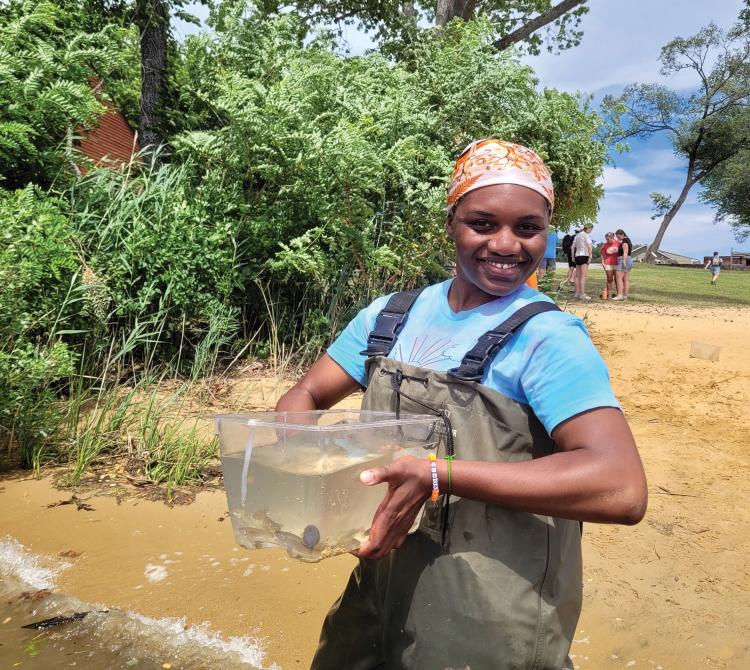
Seining for education.
Arundel Rivers staff bring campers to the riverside to catch near-shore critters. For many of our students, it is their first time touching a living fish. We teach safe handling techniques and fish identification and encourage students to observe the fish as both neighbors and as a data set, understanding what adaptations these creatures have developed to live in the shallows of the Rhode and what their presence means for water quality. 2026 highlights: we caught striped bass, harvestfish, and pipefish, and we even got to observe a diamondback terrapin actively nesting on our seining beach!
Oyster boat builders.
Another favorite activity is our oyster boat construction challenge for students. Staff use pictures and graphs to help students explore the state of the Eastern oyster in our rivers, their ecological and economic importance, and the history of how humans have engaged with them. Students are challenged to build an oyster boat model capable of floating and holding at least 13 oyster shells.
Our programs go beyond exploration and enjoyment. Arundel Rivers also strives to help our students understand how they can become green field professionals, whether they’re interested in oyster aquaculture, construction, finance work, or captaining a ship. To this end, our education and outreach intern, Sydney Hall, designed and held a green careers tour of Quiet Waters Park. Participants toured two major environmental restoration sites and learned about the construction, community engagement, business management, project management, and finance-related jobs necessary to make those projects successful.
Kids are potential incarnate, and our waterways need potential advocates, recreators, protectors, and stewards. The Summer of Science and connected programs help realize that potential, taking students from ignorance about their environment to awareness of the joys, opportunities, and challenges those ecosystems contain and how they can take action on these issues. With laughter and joy and hard conversations and luck, today’s campers will be tomorrow’s ecosystem leaders.
Learn more at arundelrivers.org.
By Mairin Corasaniti, Arundel Rivers Federation


