With retirement on the horizon, Jon Wall was looking for a new hobby and thought sailing might be a good fit. He’d sailed a Sunfish a couple of times as a kid, and more recently he’d gone sailing on a C&C with friends. Here Jon shares, in his own words, how he jumped into sailing, starting with an entry-level course and moving into racing. Just six years out from taking a beginner sailing course, Jon even has a bluewater passage under his belt.
A frosty start
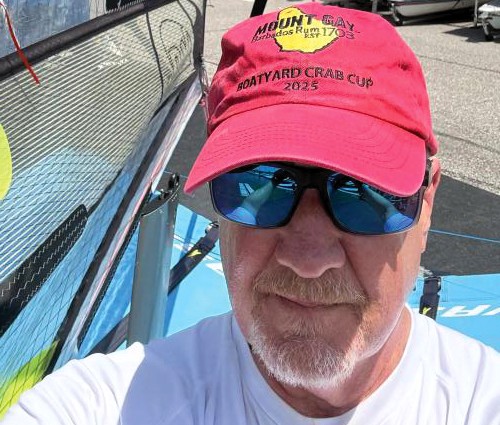
Jon: In the fall of 2019, I enrolled in ASA 101 and 102 sailing classes at J/World Annapolis with my young-adult son. We put our new skills into action that winter, racing in Annapolis Yacht Club’s (AYC) frostbite series aboard one of J/World’s boats, with an instructor onboard and another young man as crew. Admittedly, at first, I felt panic, but very quickly racing became very fun.
After a break due to Covid, I went on to take an advanced sail trim course and, in the spring of 2024, I started trimming jib on the J/30 Suzie Q. We race in the AYC Wednesday night races and frostbite series and the Eastport Yacht Club Friday night beer can races. We also compete in distance races and charity regattas, including the EWE Spirit Regatta, Maryland Cures Cancer Regatta, and Crab Cup. At the time of this interview (September), we’ve just competed in the J/30 North American Championships hosted by Eastport Yacht Club in Annapolis, and I’m still a little sore from three days of competitive racing!
Benefits of joining the Keelboat Club
In 2025, I became a member of Annapolis Sailing School’s Keelboat Club, which has been a really good way to get time on the water. Club members race Rainbow 24s on Sunday and Monday nights and have access to a Tartan 24. Racing the Rainbows, we usually get in a couple of races each night, and we rotate positions each race, giving me time on the tiller and experience trimming the mainsail. I try to take what I’ve learned on Suzie Q about racing tactics and apply those strategies during the Keelboat Club races.
Foiling!
For a change from big boats, I gave the Waszp a try this summer. I thought, ‘That looks really fun; let’s see what it’s like.’ I took two classes hosted at Severn Sailing Association. It was a very humbling experience with a lot of swimming, and I never did get up on foils. I would probably keep trying to foil if I weren’t already committed to other sailing opportunities.
Safety at Sea
Because bluewater sailing was on my bucket list, I began to explore what I would need to do to be picked up as crew aboard a boat racing from Annapolis to Bermuda or Newport. When I learned that for both races a certain number of crew members must have completed Safety at Sea, I enrolled. I took the course last spring, which was the first time that the course was held at the Maritime Conference Center near BWI Airport instead of the US Naval Academy. I think the session on first aid training will be very useful in general, but the best part may have been jumping in the pool in full foulies and climbing up three or four feet into a life raft. That was quite challenging! Also right up at the top of the list of sessions that I enjoyed is the radio and signaling training seminar, in which we learned to give correct information to someone trying to find your boat in an emergency. Another highlight for me was “playing” with flares during the session on signals and signaling.
A first bluewater experience
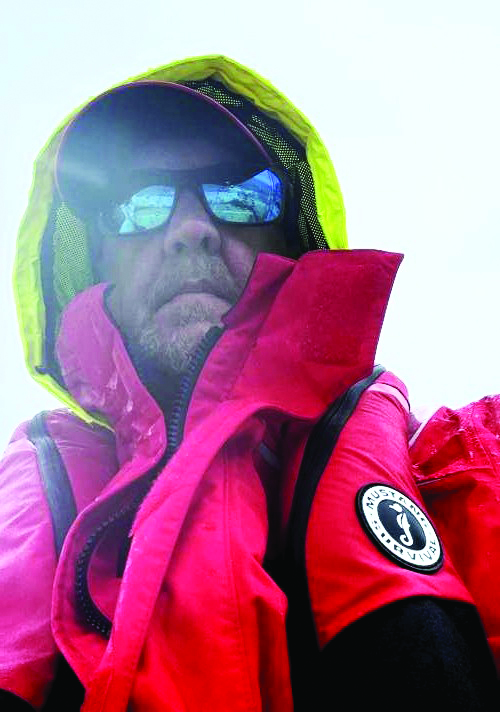
My big stretch this year was to deliver the J/42 Allegiant from Bermuda to Annapolis after the Mustang Survival Annapolis to Bermuda Race. I was invited aboard via connections from Suzie Q. It was an amazing experience. It’s quite a feeling when you realize that the depth gauge doesn’t’ register anymore or when you look at the chartplotter and there is nothing near you. At times I asked myself, ‘What am I doing here,’ such as the day it was blowing 25 knots with a four- to six-foot sea state. But the sunsets and the glowing phosphorescence at night were absolutely fantastic. While the passage knocked some of the romance off (think six days without a shower), I’m very glad that I did it.
Century Club
Last year I started tracking my days on the water for the SpinSheet Century Club. That year, I had about 85-plus sailing days, and so far, this year I'm already at 88 days (mid-September). I think I can make 100 this year.
What do you get out of sailing?
On the water I’ve discovered that each sailing skill has many layers. There’s so much to learn! That aspect of sailing keeps me very engaged.
What are your future sailing plans?
I would like to gain more experience on the bow with the spinnaker, and I would like to improve my race starts, trimming skills, and ability to read wind gusts. Possibly I would like to crew in the Annapolis to Newport Race.
If someone were interested in learning to sail, what would you tell them?
Don't wait! Take a class and find a way to practice your new skills once your class ends. Classwork and reading books are good, but learning by doing is better. One way to get time on the water is to be crew for someone who races their boat. Racing is an excellent way to speed up learning; maneuvers usually happen faster and you get more repetitions than a casual day sail.
Don’t worry about making mistakes. It can be a good experience when things go wrong. That’s when you ask, “What happened, and how can we do better next time?”


